
Education
Inclusive Education for Students with Special Needs: The Real-Life Version
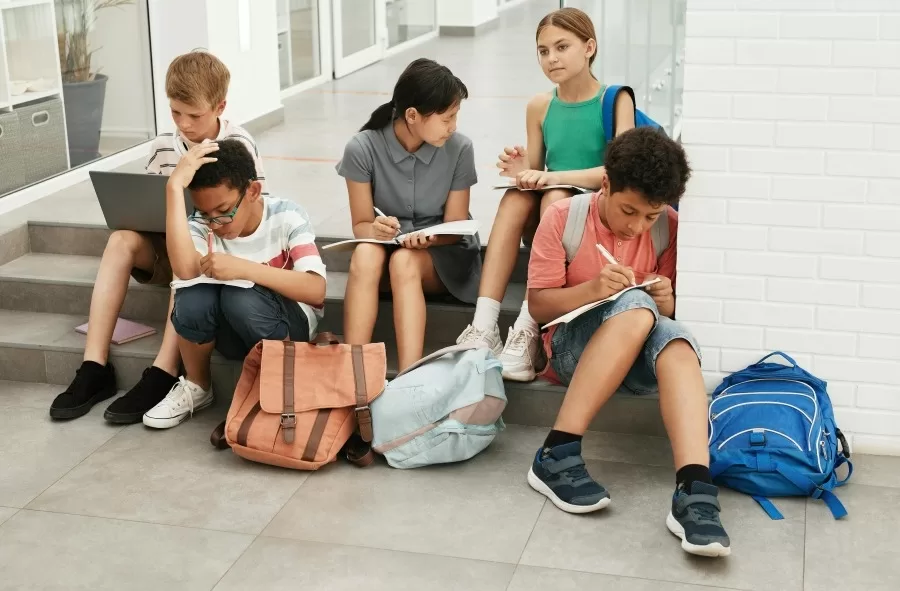
I remember walking into a fifth-grade classroom a few years ago — nothing fancy, just the smell of dry-erase markers and the hum of a projector. But there was something different about it. You couldn’t tell who was “supposed to be” getting extra help and who wasn’t. No separate table in the corner. No quiet pity glances. Just kids. Learning. Together.
That’s inclusive education when it’s working. It’s not just a policy or a buzzword — it’s a feeling. A vibe. A “yep, you belong here” kind of atmosphere.
And here’s the thing: it’s messier than the brochures make it look.
So… what exactly is “inclusive education”?
If you strip away the jargon, it’s basically this: all students, including students with special needs, learning in the same space, with the same general curriculum, while getting the support they individually need.
It’s not about pretending everyone learns the same way. They don’t. It’s about the school adapting to the kid, not the other way around.
Maybe that means the teacher explains the math problem three different ways. Maybe it means speech-to-text software for one kid, noise-canceling headphones for another, and a hands-on science demo for someone who can’t follow the instructions on paper.
It’s not a “special program” off to the side. It’s the whole system flexing to fit real humans.
In theory vs. in reality
The theory sounds great. The reality… is complicated.
I’ve seen teachers try their absolute best with 30-plus students and no co-teacher, pulling every trick in the book just to keep the room running. I’ve seen parents quietly panic because they’re scared their child will be left out or — even worse — tolerated but not included.
And I’ve seen those awkward moments: a science lab that a wheelchair user can’t physically participate in, a group project where the “quiet” kid just gets ignored, or a teacher who’s clearly out of their depth with a communication device they’ve never used before.
That’s the messy truth. Inclusion isn’t just “everyone in the same room.” If a student doesn’t feel like they’re part of the group, it’s not real inclusion.
Why this matters for everyone
People sometimes treat inclusive education like it’s charity. It’s not.
When kids grow up learning alongside peers with different abilities, they pick up skills you don’t get from textbooks. Problem-solving. Patience. Understanding that there’s no one “right” way to think.
And it’s not just the feel-good stuff — studies show inclusive classrooms can actually boost learning for all students. The different teaching methods that help a student with dyslexia also help the kid who just processes info better with visuals. The sensory break area isn’t only for students with autism — plenty of kids need a moment of quiet in a busy school day.
Inclusion, done right, lifts the whole class.
The roadblocks nobody loves talking about
Let’s be honest. There are hurdles:
- Training gaps – Many teachers simply weren’t taught how to work with diverse learning needs. They’re figuring it out as they go.
- Too few resources – One special ed teacher for hundreds of kids? Yeah, that’s a thing.
- Testing pressure – When standardized tests rule everything, flexible teaching gets squeezed out.
- Attitudes – This one’s huge. If people quietly believe a student “can’t keep up,” they often (without meaning to) stop expecting much.
And sometimes? The “problem” isn’t the student at all. It’s the noisy, fluorescent-lit classroom. Or the one-size-fits-all homework. Or the fact that the “accessible” door is on the opposite side of the building in the rain.
When it works: the ingredients
I’ve noticed something: in classrooms where inclusion really works, you see certain patterns:
- Two teachers, one team. A general ed teacher and a special ed teacher, actually planning together.
- Flexible lessons from the start. Not “regular lesson + accommodations later.” Instead, multiple ways to learn built right in.
- Peer pairings that feel natural. Not “helper and helped,” but two kids working together, each with something to offer.
- Tech as a normal tool. Screen readers, captions, voice typing — not locked away for “special” cases, just there for anyone.
It’s not magic. It’s just thoughtfulness plus planning.
Parents: the behind-the-scenes MVPs
If you’ve ever sat with a parent of a student with special needs, you’ll know — they’re experts on their kid. They know what works, what doesn’t, and when the system’s just pretending to listen.
I’ve seen parents spend hours preparing for meetings that last 20 minutes. They shouldn’t have to fight so hard.
When schools actually work with parents — not just at the big yearly meeting, but in quick check-ins, emails, “hey, this worked today” moments — things move faster. The student benefits, the teacher benefits, and the whole vibe of the classroom shifts.
What the kids say (because we forget to ask)
When you actually ask students about inclusion, they keep it simple:
“I like when we all sit together.”
“It helps when the teacher explains stuff in more than one way.”
“I don’t want people to think I’m different in a bad way.”
That’s it. No complicated theory. Just wanting to belong.
Small shifts that change everything
Not every school can get a budget overhaul. But you can start small:
- Let kids choose how they show they’ve learned something — essay, video, art, whatever works.
- Make a quiet corner in the room where anyone can take a break.
- Rotate group roles so no one’s always “the note-taker” or “the observer.”
- Use more visuals — not just for special needs, but for everyone’s brain.
It’s about making the space work for more than one “type” of student.
The emotional core of inclusion
This is the part you can’t legislate: the feeling of being wanted in the room.
It’s in a classmate scooting over to make space without a teacher asking.
It’s in a teacher quietly adapting instructions without making it a big deal.
It’s in the way a school celebrates what a student can do instead of what they can’t.
Policies matter. Training matters. But culture? That’s what makes inclusion stick.
My takeaway
Inclusive education for students with special needs isn’t a side project. It’s not “extra.” It’s what school should be. And yeah, it’s messy. There will be awkward moments. There will be trial and error. But when it works, it changes not just the students with special needs — it changes everyone in the room.
Because at the end of the day, education isn’t about cramming facts into kids’ heads. It’s about building a world where everyone belongs. And you can’t do that if you keep some people on the sidelines.

Elon Musk: Business Leader Behind Tesla, SpaceX, and xAI
Quick Facts Field Details Full Name Elon Reeve Musk Born June 28, 1971 Birthplace Pretoria, South Africa Nationality South African,...


Best Places to Visit in Vietnam – Complete Travel Guide
Vietnam is one of the most rewarding destinations in Southeast Asia. It’s a country where emerald bays meet towering limestone...

Best iPhones to Buy in 2026: Top 7 Models Compared with Features, Prices, and Expert Advice
Choosing the best iPhone to buy in 2026 is not simply about picking the newest release. With several generations still...


Why Gold and Silver Are Rising: What’s Driving Precious Metals’ Strong Momentum
Gold and silver are gaining strength as investors seek safe-haven assets amid global economic and geopolitical uncertainty. Silver is outperforming...


Best Hospitals in India for Heart Surgery – Top Cardiac Care Centers in 2026
Heart disease is a significant health challenge in India and worldwide. With rising incidence of coronary artery disease, heart attacks,...


Best Airline Loyalty Programs in 2026: Which Frequent Flyer Programs Are Really Worth It?
Spend enough time in airports and you’ll notice something interesting. Some travelers move effortlessly — priority check-in, lounge access, early...


Best Medical Schools in the US in 2026: A Complete and Easy Guide for Future Doctors
Choosing from the best medical schools in the US is one of the most important decisions in a future doctor’s...


Cars Below 15 Lakhs in India: The Complete Buyer’s Guide for 2026
The Indian automobile market in 2026 has entered a value-driven era. Buyers no longer need to exceed their budget to...


Cuisine of the Middle East: Flavours That Carry History on Every Plate
There’s a reason people speak of the cuisine of the Middle East with a certain reverence. It isn’t simply about...


Credit Card With Benefits Best: How to Maximize Value
Credit cards have become part of everyday life — from paying utility bills to booking travel online. But today, a...