
Education
Lack of Evidence Hampers Progress on Corporate-Led Ecosystem Restoration
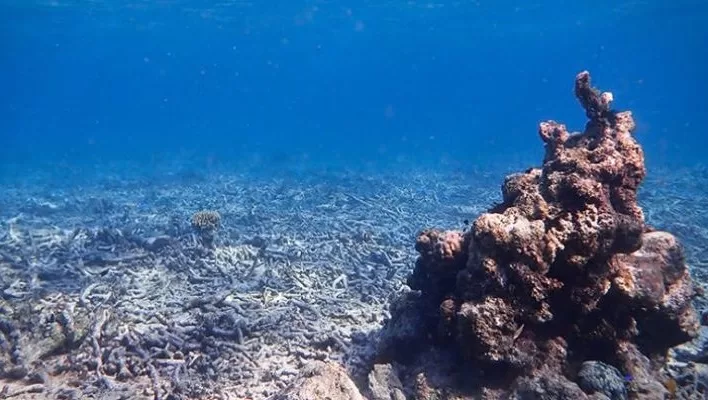
A near-total lack of transparency is making it impossible to assess the quality of corporate-led ecosystem restoration projects, a new study finds.
The world’s largest corporations have the potential to lift ecosystem restoration efforts to an unprecedented scale. But their involvement has to be managed with proper evidence and accountability, to make sure the outcomes are beneficial and fair for everyone.
Rachael Garrett
An international team of scientists has analysed publicly available sustainability reports released by 100 of the world’s largest companies and found that despite many businesses claiming to actively rebuild damaged ecosystems, very little is known about what is actually being achieved.
Efforts to rebuild degraded environments are vital for achieving global biodiversity targets, and corporate-led projects offer huge potential to restore damaged and lost ecosystems around the globe.
But the study reveals that over 90 percent of corporate-led restoration projects fail to report a single ecological outcome. Around 80 percent of projects do not reveal how much money is invested in restoration, and a third fail to even state the area of habitat that they aim to restore.
The United Nations has launched a Decade on Ecosystem Restoration, and in recent years businesses around the world have collectively pledged to plant billions of trees, hundreds of thousands of corals and tens of thousands of mangroves. Around two thirds of the top 100 largest global corporations undertake ecosystem restoration.
The study is published today in the journal Science.
“Ultimately, if big businesses are going to contribute effectively to the UN Decade on Ecosystem Restoration, there needs to be transparency and consistency in reporting,” said Professor Rachael Garrett, Moran Professor of Conservation and Development at the University of Cambridge Conservation Research Institute, and a co-author of the report.
She added: “This is in the interest of the businesses themselves, who stand to gain from demonstrating to their customers, shareholders, employees and the wider public that they are making meaningful impacts with their declared restoration efforts.
“The world’s largest corporations have the potential to lift ecosystem restoration efforts to an unprecedented scale. But their involvement has to be managed with proper evidence and accountability, to make sure the outcomes are beneficial and fair for everyone.”
Many countries require businesses to conduct Environmental Impact Assessments (EIAs) to quantify and reduce their environmental damage, and other private-sector initiatives also encourage companies to measure and disclose their biodiversity impacts. However, the study finds that current guidelines and legal frameworks around ecosystem restoration are inadequate, and are not yet resulting in appropriate reporting by businesses.
The researchers are calling for more transparency around the reporting of corporate-led ecosystem restoration projects, and for reporting to be more consistently centred around scientific principles that determine ecosystem restoration success.
“Restoring degraded ecosystems is an urgent challenge for this decade, and big businesses have the potential to play a vital role,” said Dr Tim Lamont at Lancaster University, lead author of the study.
He added: “With their size, resources and logistics expertise, they could help deliver the large-scale restoration we need in many places. But at the moment there is very little transparency, which makes it hard for anyone to assess if projects are delivering benefits for ecosystems or people.
“When a business says it has planted thousands of trees to restore habitat and soak up carbon – how do we know if this has been delivered, if the trees will survive, and if it has resulted in a functioning ecosystem that benefits biodiversity and people? In many cases, we’ve found that the evidence provided by large corporations to support their claims is insufficient.”
The researchers say new improved reporting guidelines around ecosystem restoration should:
- Recommend that companies clearly differentiate between restoration activities that merely mitigate the negative environmental impacts of a business’s operations from those that aim to provide wider climate, biodiversity and social justice outcomes.
- Recommend a principle-based approach, drawing from conservation science, for planning and reporting, so that restoration projects in a range of different contexts can all maintain high standards across core areas.
- Ensure corporations engage with and empower local stakeholders to co-design restoration projects from the outset.
Source – Cambridge


Elon Musk: Business Leader Behind Tesla, SpaceX, and xAI
Quick Facts Field Details Full Name Elon Reeve Musk Born June 28, 1971 Birthplace Pretoria, South Africa Nationality South African,...


Best Places to Visit in Vietnam – Complete Travel Guide
Vietnam is one of the most rewarding destinations in Southeast Asia. It’s a country where emerald bays meet towering limestone...


Best iPhones to Buy in 2026: Top 7 Models Compared with Features, Prices, and Expert Advice
Choosing the best iPhone to buy in 2026 is not simply about picking the newest release. With several generations still...


Why Gold and Silver Are Rising: What’s Driving Precious Metals’ Strong Momentum
Gold and silver are gaining strength as investors seek safe-haven assets amid global economic and geopolitical uncertainty. Silver is outperforming...


Best Hospitals in India for Heart Surgery – Top Cardiac Care Centers in 2026
Heart disease is a significant health challenge in India and worldwide. With rising incidence of coronary artery disease, heart attacks,...


Best Airline Loyalty Programs in 2026: Which Frequent Flyer Programs Are Really Worth It?
Spend enough time in airports and you’ll notice something interesting. Some travelers move effortlessly — priority check-in, lounge access, early...


Best Medical Schools in the US in 2026: A Complete and Easy Guide for Future Doctors
Choosing from the best medical schools in the US is one of the most important decisions in a future doctor’s...


Cars Below 15 Lakhs in India: The Complete Buyer’s Guide for 2026
The Indian automobile market in 2026 has entered a value-driven era. Buyers no longer need to exceed their budget to...


Cuisine of the Middle East: Flavours That Carry History on Every Plate
There’s a reason people speak of the cuisine of the Middle East with a certain reverence. It isn’t simply about...


Credit Card With Benefits Best: How to Maximize Value
Credit cards have become part of everyday life — from paying utility bills to booking travel online. But today, a...