
Technology
Samsung Electronics Announces New Environmental Strategy
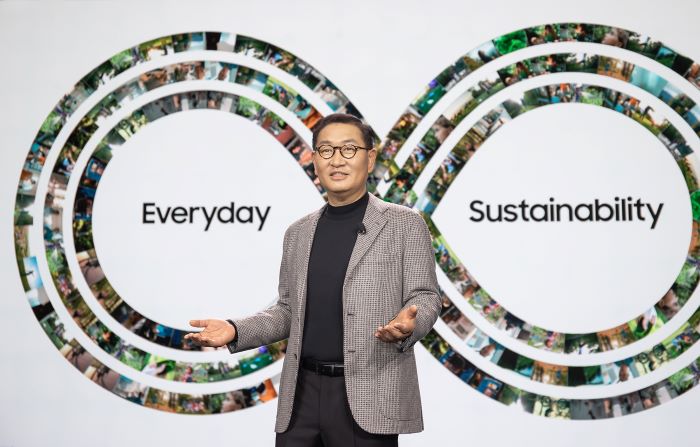
– To achieve net zero emissions by 2050; Joins RE100 initiative
– Energy- and resource-efficient products to empower consumers for sustainable living
– To invest in and develop innovative technologies for a better planet; Apply carbon capture and clean air technology
Samsung Electronics Co., Ltd. announced its new environmental strategy, a comprehensive effort to join global efforts to tackle climate change. It includes commitments to achieve enterprise-wide net zero carbon emissions and plans to use more renewable energy, as well as to invest in and research new technologies to develop energy-efficient products, increase water reuse and develop carbon capture technology.
At the heart of the new commitment is achieving net zero carbon emissions (Scope 1 & Scope 2) for all operations in the Device eXperience (DX) Division by 2030, and across all global operations, including the Device Solutions (DS) Division, by 2050. The DX Division encompasses the company’s consumer electronics businesses, including Mobile eXperience, Visual Display, Digital Appliances, Networks and Health & Medical Equipment, while the DS Division includes the Memory, System LSI and Foundry businesses.
Samsung Electronics has also joined RE100, a global initiative dedicated to pursuing 100 percent renewable energy. As part of this commitment, the company plans to match electric power needs of all international markets where it operates, outside of Korea, with renewable energy within five years.
The new plan builds on Samsung Electronics’ existing climate efforts, significantly expanding the scope of its programs and investments. Samsung will develop new technologies and implement further sustainable practices to enable a brighter future for all.
“The climate crisis is one of the greatest challenges of our time. The consequences of inaction are unimaginable and require the contribution of every one of us, including businesses and governments,” said Jong-Hee Han, Vice Chairman and CEO of Samsung Electronics. “Samsung is responding to the threats of climate change with a comprehensive plan that includes reducing emissions, new sustainability practices and the development of innovative technologies and products that are better for our planet.”
Samsung Electronics’ environmental commitment also encompasses an enterprise-wide effort to enhance resource circularity throughout the entire product lifecycle, from raw material sourcing to recycling and disposal. The plan also details investments in new technologies to reduce emissions from process gases as well as to reduce power consumption in consumer products. The company also plans to explore carbon capture and utilization technologies and tackle harmful airborne particulate matter.
In recognition of the need for innovative approaches around environmental sustainability, Samsung Electronics will invest over KRW 7 trillion in its environmental initiatives by 2030, including reducing process gases, conserving water, expanding electronic waste collection and reducing pollutants. The investment figure excludes costs related to expansion of renewable energy use.
Net Zero Direct and Indirect Carbon Emissions by 2050
Samsung Electronics plans to achieve net zero direct and indirect carbon emissions by 2050, with the DX Division achieving its goal by 2030. By reaching net zero direct and indirect carbon emissions, Samsung Electronics expects to reduce the equivalent of about 17 million tons of carbon dioxide-equivalent (CO2e) emissions based on 2021 figures.
To propel these efforts, Samsung Electronics will invest heavily in innovative technologies for treatment facilities that reduce carbon emissions. The company plans to develop new technologies to significantly reduce process gases — a byproduct of semiconductor manufacturing — and install treatment facilities on its semiconductor manufacturing lines by 2030. Samsung Electronics will continue to expand waste heat utilization facilities and consider introducing electric heat sources to reduce LNG boiler usage.
Samsung Electronics has joined RE100, in a collaborative effort to reduce indirect carbon emissions from power consumption, and aims to match electric power needs with renewable energy by 2050 for all operations globally. As part of this initiative, Samsung Electronics plans to run all operations outside of Korea as well as the DX Division on renewable energy within five years. The company’s renewable energy sourcing methods will include, but not limited to, signing power purchase agreements (PPA), purchasing renewable energy certificates and participating in green pricing programs.
The goal for matching electricity use with renewable energy is 2022 for Southwest Asia and Vietnam; 2025 for Central and Latin America; and 2027 for Southeast Asia, CIS and Africa. In the U.S., China and Europe, which have already matched electric power use with renewable energy, Samsung Electronics plans to move towards expanding renewable energy power purchase agreements (PPA).
RE100 cites Korea, where many of Samsung Electronics’ production facilities are based, as one of the most challenging countries to source renewable energy. This is in part due to the country’s renewable energy market, where procurement options for corporations have begun to expand but remain limited. Additionally, the electric power needs of semiconductor manufacturing facilities have continued to increase with the expansion of Samsung Electronics’ production capacity to meet global demand. However, the company will aim to achieve renewable energy use more proactively, acknowledging the urgency of today’s climate challenges. The company will also strengthen cooperation with different stakeholders, including peers in the technology industry, international organizations and NGOs.
Ultra-Low Power Products and Resource Circularity
Part of Samsung Electronics’ pledge for a healthier planet includes ensuring its products are energy-efficient and use less electricity, while also ensuring that the entire product lifecycle is more sustainable, from raw material sourcing to disposal and recycling.
Ultra-Low Power Semiconductors and Energy-Efficient Electronics Products
Samsung Electronics plans to tap new low-power technologies to reduce energy consumption in every day consumer electronics. This includes development of new ultra-low power memory chips that aim to significantly reduce the annual power consumption of memory products used in data centers and mobile devices by 2025 compared to current products.
The company will also implement low-power technologies in major models of seven consumer electronics products – smartphones, refrigerators, washing machines, air conditioners, TVs, monitors and PCs – with the goal of lowering power consumption levels by an average of 30 percent in 2030 compared to products with the same specifications in 2019.
Going forward, Samsung Electronics will set mid-to long-term reduction targets for value chain emissions (Scope 3). Samsung Electronics will also focus on new approaches to reduce emissions in areas such as supply chains, logistics and resource circularity, as well as supporting suppliers in setting their emissions targets and reduction efforts.
Maximizing Resource Circularity Across the Entire Product Lifecycle
Samsung Electronics will double down on efforts to improve the resource circularity of electronics over the entire lifecycle of a product, from raw material sourcing to disposal and recycling, ensuring that every resource is used with as little impact on the environment as possible.
This all starts with reassessing the use of natural resources in product development. Samsung Electronics has created a new Circular Economy Lab to conduct comprehensive research on material recycling technologies and resource extraction processes from waste with the aim of applying these technologies to maximize resource circularity. In addition, Samsung Electronics plans to establish a system by 2030 in which minerals extracted from all collected waste batteries can be reused.
Also by 2030, the company aims to have 50 percent of the plastic used in its products incorporate recycled resin. The year 2050 will see this figure increase to 100 percent. The Galaxy Z Fold4 has already been designed to incorporate plastics recycled from discarded fishing nets and the success seen here will soon be expanded to additional products.
To address sustainability after product use, Samsung Electronics plans to expand the scope of its electronic waste collection system from approximately 50 countries to about 180 countries by 2030. Through this, the company plans to collect a cumulative 10 million tons of electronic waste between 2009 and 2030, the highest target in the industry and a cumulative 25 million tons by 2050. Samsung Electronics will also actively promote an upcycling program that collects used smartphones and reuses them for other purposes such as IoT (Internet of Things) devices.
Water Conservation and Pollutant Treatment Measures
Samsung Electronics also plans to maximize water resource efficiency. As domestic semiconductor manufacturing capacity expands, the daily water withdrawal needs from Samsung Electronics’ semiconductor operations in Korea are projected to double from current levels by 2030. However, the company is committing to maximizing water reuse, therefore keeping actual water withdrawals to 2021 levels.
For the DX Division, the company plans to promote water reuse by improving its water treatment facilities and to restore the same amount of water as it consumes by 2030 through water restoration projects such as water quality improvement and stream restoration.
Simultaneously, the DS Division aims to apply new technologies that remove air and water pollutants emitted during the semiconductor manufacturing process and treat them before being discharged to ensure that they have almost no additional impact on the environment from 2040.
Company-wide, Samsung Electronics plans to obtain a platinum-level Zero Waste to Landfill Certification issued by global safety certification organization Underwriters Laboratories (UL) for all global operations by 2025.
Invest in and Develop Innovative Technologies for a Sustainable Future
Samsung Electronics intends to apply the company’s leading technology in addressing global climate challenges. In particular, the company will focus on developing carbon capture and utilization technologies to reduce carbon emissions and clean air technologies to reduce particulate matter, which has become a pressing global environmental challenge.
The Carbon Capture Research Institute was established within the Samsung Advanced Institute of Technology (SAIT) in September 2021, the first of its kind in the semiconductor industry. The key mission of the Institute is to develop and commercialize carbon capture and utilization technologies that make it possible to store carbon discharged from semiconductor industrial sites and turn it into a usable resource. The technologies developed by the Institute will first be applied to semiconductor production lines after 2030 and then to other parts of the company as well as its suppliers.
The company will also develop clean air technologies, including new filtration systems, to reduce particulate matter and plans to expand usage to local communities from 2030.
Additionally, Samsung Electronics plans to identify and invest in startups that support innovative green technologies. The company is also committed to fostering ideas and supporting projects that tackle climate change through its C-Lab, the in-house venture incubation and external start-up acceleration program.
Accountability and Tracking Progress
To ensure accountability, Samsung Electronics will have its efforts objectively verified by designated organizations. Its performance will be assessed via participation in the Samsung Institute of EHS Strategy’s certification system and verified by a Carbon Reduction Verification Committee that includes third-party experts.
The company has developed implementation roadmaps for each environmental goal, including the net zero and circular economy targets, and will track progress and ensure robust implementation through the Sustainability Council, chaired by the CEO, and the Sustainability Committee, consisting of outside directors.
About Samsung Electronics Co., Ltd.
Samsung inspires the world and shapes the future with transformative ideas and technologies. The company is redefining the worlds of TVs, smartphones, wearable devices, tablets, digital appliances, network systems, memory, system LSI, foundry and LED solutions. For the latest news, please visit the Samsung Newsroom at http://news.samsung.com.
Source – Samsung


Elon Musk: Business Leader Behind Tesla, SpaceX, and xAI
Quick Facts Field Details Full Name Elon Reeve Musk Born June 28, 1971 Birthplace Pretoria, South Africa Nationality South African,...


Best Places to Visit in Vietnam – Complete Travel Guide
Vietnam is one of the most rewarding destinations in Southeast Asia. It’s a country where emerald bays meet towering limestone...


Best iPhones to Buy in 2026: Top 7 Models Compared with Features, Prices, and Expert Advice
Choosing the best iPhone to buy in 2026 is not simply about picking the newest release. With several generations still...


Why Gold and Silver Are Rising: What’s Driving Precious Metals’ Strong Momentum
Gold and silver are gaining strength as investors seek safe-haven assets amid global economic and geopolitical uncertainty. Silver is outperforming...


Best Hospitals in India for Heart Surgery – Top Cardiac Care Centers in 2026
Heart disease is a significant health challenge in India and worldwide. With rising incidence of coronary artery disease, heart attacks,...


Best Airline Loyalty Programs in 2026: Which Frequent Flyer Programs Are Really Worth It?
Spend enough time in airports and you’ll notice something interesting. Some travelers move effortlessly — priority check-in, lounge access, early...


Best Medical Schools in the US in 2026: A Complete and Easy Guide for Future Doctors
Choosing from the best medical schools in the US is one of the most important decisions in a future doctor’s...


Cars Below 15 Lakhs in India: The Complete Buyer’s Guide for 2026
The Indian automobile market in 2026 has entered a value-driven era. Buyers no longer need to exceed their budget to...


Cuisine of the Middle East: Flavours That Carry History on Every Plate
There’s a reason people speak of the cuisine of the Middle East with a certain reverence. It isn’t simply about...


Credit Card With Benefits Best: How to Maximize Value
Credit cards have become part of everyday life — from paying utility bills to booking travel online. But today, a...