
Sports
Virat Kohli: The Making of a Modern Cricket Icon
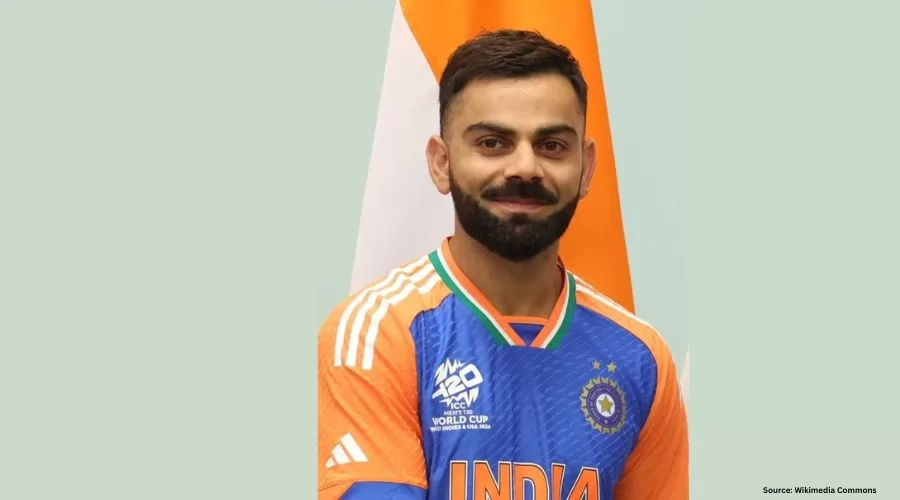
There are cricketers who arrive quietly, stack up numbers, and leave behind impressive records. And then there are cricketers who change the feeling of the game. Virat Kohli belongs to the second kind.
Kohli’s story isn’t just about runs, centuries, or trophies. It’s about intensity, obsession, self-belief—and a kind of emotional honesty Indian cricket hadn’t fully seen before him. His career has unfolded in public: every high celebrated loudly, every low dissected endlessly. And yet, through it all, he has remained unmistakably himself.
This is the story of how Virat Kohli became a modern cricket icon—not overnight, not smoothly, but through discipline, evolution, and a refusal to fade.
Delhi Beginnings: Determination Before Decoration
Born in Delhi in 1988, Kohli grew up in a middle-class household where cricket wasn’t a casual pastime—it was taken seriously. Even as a child, there was urgency in his game. He wanted runs. He wanted responsibility. He hated getting out.
At the West Delhi Cricket Academy, coaches noticed something beyond technique: intent. Kohli didn’t want to be “promising.” He wanted to dominate.
A defining moment arrived in his teens with the loss of his father. The very next day, Kohli chose to bat in a Ranji Trophy match for Delhi. The episode has been retold often, but its meaning remains simple—cricket wasn’t a hobby; it was purpose.
Under-19 to International Whites: Talent Meets Reality
Kohli captained India’s Under-19 side to World Cup glory in 2008, announcing himself as a leader who thrived on responsibility. The senior call-up followed quickly—but the transition wasn’t smooth.
Early international years were uneven. Overseas conditions exposed technical gaps; questions surfaced about temperament and longevity. Many talented batters stall at this point.
Kohli didn’t. He worked.
Fitness became non-negotiable. Technique tightened. Shot selection matured. Slowly—almost quietly—runs followed, at home and abroad. By the early 2010s, Kohli had turned potential into reliability.
The Run Machine Era: Consistency as Identity
There came a stretch when a Kohli century felt… expected. Chases became his arena. Pressure sharpened his focus. He didn’t merely score runs—he controlled games.
What defined this era wasn’t flair alone; it was consistency. Across formats, conditions, and opponents, Kohli delivered. Teams planned entire strategies around him—and still struggled to stop him.
With dominance came expectation. And in Indian cricket, expectation is relentless.
Virat Kohli’s Career at a Glance
International Career
-
Debut: ODI, 2008
-
Formats: Tests, ODIs, T20Is
-
International runs: 26,000+
-
Centuries: 84 (30 Tests, 53 ODIs, 1 T20I)
-
ODIs: Most centuries in history (53, as of December 2025)
-
Rankings: No.1 batter across all three formats at different times
-
Reputation: Among the greatest ODI run-chasers
ICC Titles
-
ODI World Cup: 2011
-
Champions Trophy: 2013
-
T20 World Cup: 2024 (Player of the Tournament)
-
T20Is: Retired after 2024 World Cup
Test Captaincy
-
Captain (Tests): 2014–2022
-
Wins: 40 (most by an Indian captain)
-
Milestone: First Test series win in Australia (2018–19)
IPL: Loyalty, Longevity—and a Trophy at Last
For years, Kohli’s IPL story carried a contradiction. Individually, he was peerless. Collectively, success felt just out of reach.
Then came 2025.
After nearly two decades with the franchise, Royal Challengers Bengaluru lifted their maiden IPL trophy. For Kohli—the only constant since 2008—it wasn’t just a win; it was closure.
IPL Highlights
-
Debut: 2008
-
Franchise: Royal Challengers Bengaluru
-
Runs: 8,000+ (most in IPL history)
-
Centuries: 8 (most ever)
-
Season peak: 2016 (most runs in a single season)
-
Captaincy: Longest-serving in franchise history
-
Title: IPL Champions, 2025
Some careers chase shortcuts. Others wait for the right ending. Kohli’s waited.
Captaincy: Intensity with Intent
Virat Kohli’s leadership changed Indian cricket’s tone. Aggressive. Expressive. Unapologetic. He demanded elite fitness, backed fast bowlers, and pushed for overseas dominance.
Not everyone loved it. It worked anyway.
India grew tougher abroad. Standards rose. Belief followed. Virat Kohli didn’t lead by calming storms—he led by walking into them.
The Lean Phase—and the Return
Every great career has a difficult chapter. For Virat Kohli, it arrived as a prolonged lean patch—especially the gap without international centuries. Criticism resurfaced. Doubt grew louder.
Virat Kohli responded not with noise, but honesty. He spoke about fatigue, pressure, and the need to step back. In doing so, he helped normalize conversations around mental health at the highest level.
The runs returned. So did perspective.
Reinvention: When Greatness Learns to Breathe
Post-lean phase, Kohli didn’t reinvent himself as a different player—he returned calmer. More measured. Still intense, but grounded.
This stage feels less about chasing records and more about presence—about contributing, enjoying, sustaining.
It’s where greatness settles into wisdom.
Beyond the Boundary: A Modern Personal Brand
Off the field, Kohli built one of India’s strongest athlete brands—rooted in fitness, discipline, and authenticity. His endorsements feel aligned because they are aligned. He doesn’t aim for perfection; he stands for clarity.
That clarity has made him durable, not just popular.
Why Kohli Matters
Kohli represents a shift. Preparation over promise. Discipline over shortcuts. Evolution over comfort.
For young athletes, he proves background doesn’t cap ambition.
For fans, he shows struggle is part of success.
For Indian cricket, he bridges tradition and modernity.
Legacy (Still in Motion)
Numbers will always follow Virat Kohli. But his legacy will be remembered for more than them:
-
Raising fitness standards
-
Normalizing mental-health conversations
-
Redefining intensity
-
Proving evolution is strength
He’s still here. Still adapting. Still present.
That might be the most modern thing about him.
FAQs
When did Virat Kohli debut internationally?
2008 (ODI).
What defines Virat Kohli’s greatness?
Consistency across formats, leadership impact, and cultural influence beyond cricket.
How did he handle his lean phase?
By stepping back, reflecting, and refocusing on mental and physical well-being.
Was he a successful captain?
Yes—especially in Tests, where he remains India’s most successful captain by wins.
What completed his IPL story?
Winning the IPL title with Royal Challengers Bengaluru in 2025.


Elon Musk: Business Leader Behind Tesla, SpaceX, and xAI
Quick Facts Field Details Full Name Elon Reeve Musk Born June 28, 1971 Birthplace Pretoria, South Africa Nationality South African,...


Best Places to Visit in Vietnam – Complete Travel Guide
Vietnam is one of the most rewarding destinations in Southeast Asia. It’s a country where emerald bays meet towering limestone...


Best iPhones to Buy in 2026: Top 7 Models Compared with Features, Prices, and Expert Advice
Choosing the best iPhone to buy in 2026 is not simply about picking the newest release. With several generations still...


Why Gold and Silver Are Rising: What’s Driving Precious Metals’ Strong Momentum
Gold and silver are gaining strength as investors seek safe-haven assets amid global economic and geopolitical uncertainty. Silver is outperforming...


Best Hospitals in India for Heart Surgery – Top Cardiac Care Centers in 2026
Heart disease is a significant health challenge in India and worldwide. With rising incidence of coronary artery disease, heart attacks,...


Best Airline Loyalty Programs in 2026: Which Frequent Flyer Programs Are Really Worth It?
Spend enough time in airports and you’ll notice something interesting. Some travelers move effortlessly — priority check-in, lounge access, early...


Best Medical Schools in the US in 2026: A Complete and Easy Guide for Future Doctors
Choosing from the best medical schools in the US is one of the most important decisions in a future doctor’s...


Cars Below 15 Lakhs in India: The Complete Buyer’s Guide for 2026
The Indian automobile market in 2026 has entered a value-driven era. Buyers no longer need to exceed their budget to...


Cuisine of the Middle East: Flavours That Carry History on Every Plate
There’s a reason people speak of the cuisine of the Middle East with a certain reverence. It isn’t simply about...


Credit Card With Benefits Best: How to Maximize Value
Credit cards have become part of everyday life — from paying utility bills to booking travel online. But today, a...