
Education
World’s Most Threatened Seabirds Visit Remote Plastic Pollution Hotspots, Study Finds
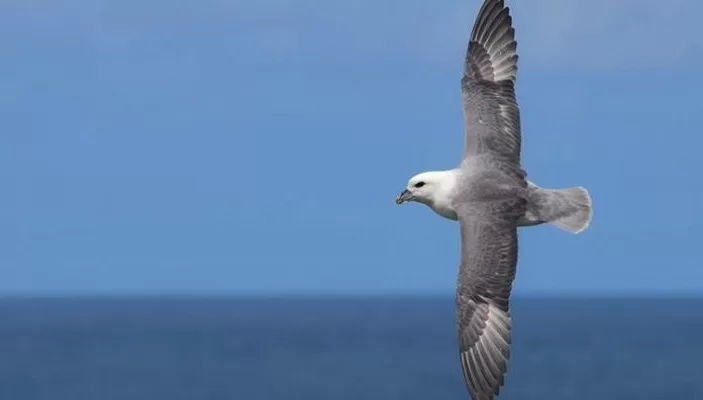
Analysis of global tracking data for 77 species of petrel has revealed that a quarter of all plastics potentially encountered in their search for food are in remote international waters – requiring international collaboration to address.
Ocean currents cause big swirling collections of plastic rubbish to accumulate far from land
Lizzie Pearmain
The extensive study assessed the movements of 7,137 individual birds from 77 species of petrel, a group of wide-ranging migratory seabirds including the Northern Fulmar and European Storm-petrel, and the Critically Endangered Newell’s Shearwater.
This is the first time that tracking data for so many seabird species has been combined and overlaid onto global maps of plastic distribution in the oceans.
The results show that plastic pollution threatens marine life on a scale that transcends national boundaries: a quarter of all plastic exposure risk occurs in the high seas. This is largely linked to gyres – large systems of rotating ocean currents – where vast accumulations of plastics form, fed by waste entering the sea from boats, and from many different countries.
Seabirds often mistake small plastic fragments for food, or ingest plastic that has already been eaten by their prey. This can lead to injury, poisoning and starvation, and petrels are particularly vulnerable because they can’t easily regurgitate the plastic. In the breeding season they often inadvertently feed plastic to their chicks.
Plastics can also contain toxic chemicals that can be harmful to seabirds.
Petrels are an understudied but vulnerable group of marine species, which play a key role in oceanic food webs. The breadth of their distribution across the whole ocean makes them important ‘sentinel species’ when assessing the risks of plastic pollution in the marine environment.
“Ocean currents cause big swirling collections of plastic rubbish to accumulate far from land, way out of sight and beyond the jurisdiction of any one country. We found that many species of petrel spend considerable amounts of time feeding around these mid-ocean gyres, which puts them at high risk of ingesting plastic debris,” said Lizzie Pearmain, a PhD student at the University of Cambridge’s Department of Zoology and the British Antarctic Survey, and joint corresponding author of the study.
She added: “When petrels eat plastic, it can get stuck in their stomachs and be fed to their chicks. This leaves less space for food, and can cause internal injuries or release toxins.”
Petrels and other species are already threatened with extinction due to climate change, bycatch, competition with fisheries, and invasive species such as mice and rats on their breeding colonies. The researchers say exposure to plastics may reduce the birds’ resilience to these other threats.
The north-east Pacific, South Atlantic, and the south-west Indian oceans have mid-ocean gyres full of plastic waste, where many species of threatened seabird forage.
“Even species with low exposure risk have been found to eat plastic. This shows that plastic levels in the ocean are a problem for seabirds worldwide, even outside of these high exposure areas,” said Dr Bethany Clark, Seabird Science Officer at BirdLife International and joint corresponding author of the study.
She added: “Many petrel species risk exposure to plastic in the waters of several countries and the high seas during their migrations. Due to ocean currents, this plastic debris often ends up far away from its original source. This highlights the need for international cooperation to tackle plastic pollution in the world’s oceans.”
The study also found that the Mediterranean Sea and the Black Sea together account for over half of petrels’ global plastic exposure risk. However, only four species of petrel forage in these enclosed, busy areas.
The study was led by a partnership between the University of Cambridge, BirdLife International and the British Antarctic Survey, in collaboration with Fauna & Flora International, the 5 Gyres Institute, and over 200 seabird researchers in 27 countries.
It is published today in the journal Nature Communications.
To get their results, the researchers overlaid global location data, taken from tracking devices attached to the birds, onto pre-existing maps of marine plastic distribution. This allowed them to identify the areas on the birds’ migration and foraging journeys where they are most likely to encounter plastics.
Species were given an ‘exposure risk score’ to indicate their risk of encountering plastic during their time at sea. A number of already threatened species scored highly, including the Critically Endangered Balearic Shearwater, which breeds in the Mediterranean, and Newell’s Shearwater, endemic to Hawaii.
Another Endangered species, the Hawaiian Petrel also scored high for plastic exposure risk, as did three species classified by the IUCN as Vulnerable: the Yelkouan Shearwater, which breeds in the Mediterranean; Cook’s Petrel, which breeds in New Zealand, and the Spectacled Petrel, which only breeds on an extinct volcano called Inaccessible Island, part of the Tristan da Cunha archipelago, a UK Overseas Territory.
“While the population-level effects of plastic exposure are not yet known for most species, many petrels and other marine species are already in a precarious situation. Continued exposure to potentially dangerous plastics adds to the pressures,” said Professor Andrea Manica at the University of Cambridge’s Department of Zoology, a co-author of the study.
He added: “This study is a big leap forward in understanding the situation, and our results will feed into conservation work to try and address the threats to birds at sea.”
The research was funded by the Cambridge Conservation Initiative’s Collaborative Fund for Conservation, sponsored by the Prince Albert II of Monaco Foundation, and the Natural Environment Research Council.
Source – Cambridge

Elon Musk: Business Leader Behind Tesla, SpaceX, and xAI
Quick Facts Field Details Full Name Elon Reeve Musk Born June 28, 1971 Birthplace Pretoria, South Africa Nationality South African,...

Best Places to Visit in Vietnam – Complete Travel Guide
Vietnam is one of the most rewarding destinations in Southeast Asia. It’s a country where emerald bays meet towering limestone...


Best iPhones to Buy in 2026: Top 7 Models Compared with Features, Prices, and Expert Advice
Choosing the best iPhone to buy in 2026 is not simply about picking the newest release. With several generations still...


Why Gold and Silver Are Rising: What’s Driving Precious Metals’ Strong Momentum
Gold and silver are gaining strength as investors seek safe-haven assets amid global economic and geopolitical uncertainty. Silver is outperforming...


Best Hospitals in India for Heart Surgery – Top Cardiac Care Centers in 2026
Heart disease is a significant health challenge in India and worldwide. With rising incidence of coronary artery disease, heart attacks,...


Best Airline Loyalty Programs in 2026: Which Frequent Flyer Programs Are Really Worth It?
Spend enough time in airports and you’ll notice something interesting. Some travelers move effortlessly — priority check-in, lounge access, early...


Best Medical Schools in the US in 2026: A Complete and Easy Guide for Future Doctors
Choosing from the best medical schools in the US is one of the most important decisions in a future doctor’s...


Cars Below 15 Lakhs in India: The Complete Buyer’s Guide for 2026
The Indian automobile market in 2026 has entered a value-driven era. Buyers no longer need to exceed their budget to...


Cuisine of the Middle East: Flavours That Carry History on Every Plate
There’s a reason people speak of the cuisine of the Middle East with a certain reverence. It isn’t simply about...


Credit Card With Benefits Best: How to Maximize Value
Credit cards have become part of everyday life — from paying utility bills to booking travel online. But today, a...