
Technology
Humanoid Robots Are Clocking In Now? Huh
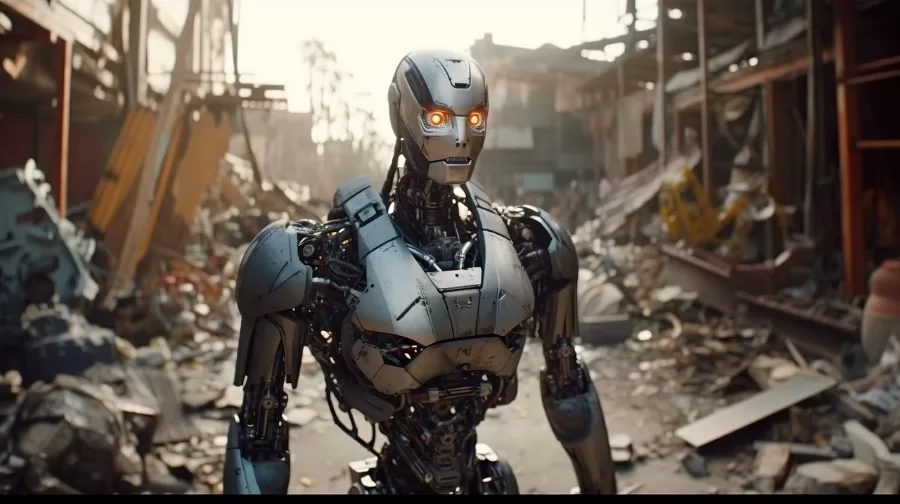
Not gonna lie — the first time I saw a humanoid robot working an actual shift, I did a double take. This was in Tokyo, at one of those tech-forward cafés that already feels like it’s from five years in the future. The robot was behind the counter, chatting (in its own weird way) with customers, taking orders, making coffee. No wires sticking out, no lab coats in sight. Just… doing its job.
It wasn’t a demo. It wasn’t a gimmick. It was just Tuesday.
And that’s when it really hit me: humanoid robots are entering the workforce. Not in some abstract, buzzword-filled way — like, actually. Like, clocking in. Getting sh*t done.
Let’s talk about it.
We’ve Been Expecting You, Robot
If you’re like me, you probably grew up on sci-fi movies that warned us this day would come. Robots taking over jobs. Some helpful, some hostile. (I’m looking at you, Skynet.)
But what’s happening now? It’s… subtler. And less dramatic.
Instead of chrome-faced androids walking down the street in full-on dystopian mode, we’ve got robots like Digit (from Agility Robotics) showing up in warehouses, walking on two legs, carrying boxes. Or Tesla’s Optimus trying to learn how to fold laundry. (Still waiting on it to master fitted sheets though — good luck.)
And they’re not just chilling in factories. They’re slowly creeping into regular spaces — hotels, hospitals, airports. Like guests who somehow became part of the staff.
But Why Humanoid?
That’s the part that always confused me.
Why not keep using regular ol’ machines — conveyor belts, mechanical arms, whatever? Why give robots faces and legs and weirdly human gestures?
Well, here’s what I realized after falling into a few too many YouTube rabbit holes: humanoid robots make sense because our world is made for humans.
Stairs, doorknobs, buttons, hallways — all designed with our bodies in mind. If you want a robot to function in our environment without rebuilding everything, it kind of has to be… shaped like us.
Also, there’s the comfort factor. People are more willing to interact with something that at least sort of looks human — even if it’s still clearly a robot. There’s a weird psychological ease there. As long as it doesn’t look too human. That’s where it gets creepy real fast.
What Jobs Are They Actually Doing?
Let’s cut through the noise. Right now, humanoid robots aren’t leading meetings or writing marketing copy (though I guess technically I’m competing with AI here, huh?).
What they are doing:
- Hauling stuff in warehouses
- Delivering meals in hospitals
- Welcoming guests at hotel lobbies
- Assisting in eldercare by helping people stand or move
Pretty straightforward, mostly physical tasks. But honestly, that’s where help is needed most. These are the kinds of jobs that wear humans out — literally. If a robot can lift a patient out of bed safely or carry a heavy package across a warehouse floor without complaining, that’s a win.
Does that mean they’re flawless? Heck no. I’ve seen footage of robots face-planting or freezing up mid-task. Like, imagine trying to be polite while your assistant short-circuits trying to hand you a stapler.
But here’s the kicker — they get better. Fast. Unlike humans, they don’t have to learn from scratch. One robot messes up, and a software patch makes all the others smarter the next day.
The Big Question: Are We All Getting Replaced?
Okay, let’s rip off the Band-Aid.
Are humanoid robots going to take our jobs?
Some? Yeah. Eventually.
If your job is physically repetitive, dangerous, or extremely boring, there’s a good chance it’ll get automated — if not by a humanoid, then by some kind of robot. Warehouse work, basic security, maybe even food prep.
But — and this is a big but — not everything can be handed over to bots. There’s still a long list of jobs that need us. Human intuition, creativity, empathy — all that unpredictable, beautifully chaotic stuff we bring to the table. Robots don’t do that (yet… fingers crossed they never do it too well).
Even in places like healthcare, robots are assistants, not replacements. They’re helping nurses, not replacing them. They’re delivering meds, not diagnosing your weird rash (please see a doctor).
And here’s a fun twist: this shift might actually create more jobs than it takes. We’ll need robot trainers, repair technicians, ethics consultants, maybe even robot therapists? (Okay, that last one might be a stretch. Or is it?)
But Let’s Talk Ethics. Because It’s Getting Murky.
So we’ve got humanoid robots joining the workforce. Great. But… who’s responsible if one messes up?
Let’s say a robot drops a tray of food on a kid’s head. Is that on the robot? The manufacturer? The place that “hired” it?
We don’t really have clear answers yet. And then there’s the data thing — these robots see, hear, and process a lot. Are they recording us? Is our behavior being analyzed? Are we gonna need a “robot privacy act” someday?
Also, there’s the labor angle. Robots don’t get sick, don’t unionize, don’t ask for raises. That’s great for business, but maybe not so great for… us. It’s worth keeping an eye on how companies use this tech, especially when cost-cutting starts sounding a little too convenient.
What’s the Vibe Five Years from Now?
Here’s how I picture it.
You walk into your office building. The front desk has a humanoid robot that greets you by name and tells you your 11am got pushed. Another bot delivers your coffee (finally got your name right this time). Upstairs, a robotic IT assistant silently fixes your Wi-Fi without judging your terrible password choice.
Is it weird? At first, sure. But then it becomes background noise — just another part of life. Like how no one thinks twice about self-checkout anymore, even though it felt super weird the first time.
And who knows? Maybe they’ll even have robot coworkers that tell bad jokes in the break room.
One Last Thought Before You Go
I know there’s a lot of anxiety wrapped up in this topic. And I get it. Humanoid robots entering the workforce feels like a big shift — because it is.
But I don’t think the future has to be scary. If anything, we’ve been through so many tech waves already — the internet, smartphones, automation — and we’ve adapted every time.
Maybe robots can take some of the heavy lifting, literally and metaphorically, and free us up for the stuff that makes us, well, human. Things like connection, storytelling, invention, care.
The future’s not written yet. We’re writing it right now — one shift, one decision, one awkward coffee-ordering robot at a time.


Elon Musk: Business Leader Behind Tesla, SpaceX, and xAI
Quick Facts Field Details Full Name Elon Reeve Musk Born June 28, 1971 Birthplace Pretoria, South Africa Nationality South African,...


Best Places to Visit in Vietnam – Complete Travel Guide
Vietnam is one of the most rewarding destinations in Southeast Asia. It’s a country where emerald bays meet towering limestone...

Best iPhones to Buy in 2026: Top 7 Models Compared with Features, Prices, and Expert Advice
Choosing the best iPhone to buy in 2026 is not simply about picking the newest release. With several generations still...


Why Gold and Silver Are Rising: What’s Driving Precious Metals’ Strong Momentum
Gold and silver are gaining strength as investors seek safe-haven assets amid global economic and geopolitical uncertainty. Silver is outperforming...


Best Hospitals in India for Heart Surgery – Top Cardiac Care Centers in 2026
Heart disease is a significant health challenge in India and worldwide. With rising incidence of coronary artery disease, heart attacks,...


Best Airline Loyalty Programs in 2026: Which Frequent Flyer Programs Are Really Worth It?
Spend enough time in airports and you’ll notice something interesting. Some travelers move effortlessly — priority check-in, lounge access, early...


Best Medical Schools in the US in 2026: A Complete and Easy Guide for Future Doctors
Choosing from the best medical schools in the US is one of the most important decisions in a future doctor’s...

Cars Below 15 Lakhs in India: The Complete Buyer’s Guide for 2026
The Indian automobile market in 2026 has entered a value-driven era. Buyers no longer need to exceed their budget to...


Cuisine of the Middle East: Flavours That Carry History on Every Plate
There’s a reason people speak of the cuisine of the Middle East with a certain reverence. It isn’t simply about...


Credit Card With Benefits Best: How to Maximize Value
Credit cards have become part of everyday life — from paying utility bills to booking travel online. But today, a...