Branding
What Is Branding? A Complete Beginner’s Guide

Ask ten people what branding means and you’ll get ten different answers. Some say it’s your logo. Others point to your colours, or a clever tagline. They’re all a little bit right, and all a little bit wrong.
Here’s the honest version. Branding is the work you put in to shape how people feel about your business. That feeling is worth real money. It’s why two almost-identical products can sell at very different prices, and why some customers stick with a company for years without ever shopping around.
This guide won’t just explain branding to you. It’ll help you start building your own. As you read, you’ll hit short “Try it yourself” prompts. Do them. By the time you reach the bottom, you’ll have the first real pieces of your brand written down.
Table of Contents
- What is a brand?
- What is branding?
- Branding vs. marketing
- Why branding matters
- The core elements of a brand
- Types of branding
- How to build a brand (7 steps)
- Branding across channels
- Real-world examples
- Branding terms to know
- Tips for beginners
- FAQs
What Is a Brand?
A brand isn’t the thing you sell. It’s what people believe about the thing you sell. The American Marketing Association calls it a “name, term, design, or symbol” that sets one seller apart from the rest. True, but a bit dry.
Jeff Bezos put it better: “Your brand is what other people say about you when you’re not in the room.” In other words, you don’t fully own your brand. Your customers do. Your job is to steer what they say.
What Is Branding?
So if a brand is the belief, branding is how you build that belief on purpose. Every colour you pick, every word you write, every reply you send to a customer feeds into it.
And it never really stops. Branding is a habit, not a launch. You show up the same way, again and again, until people know exactly what to expect from you. Get that right and your brand starts doing the selling for you.
Try it yourself: Finish this sentence in one line. “When people think of my business, I want them to feel ______.” Keep it somewhere visible. Every decision below should point back to it.
Branding vs. Marketing: What’s the Difference?
People mix these two up constantly, but they do different jobs.
| Branding | Marketing | |
|---|---|---|
| What it is | Who you are: identity, values, personality | How you promote what you do |
| Timeframe | Long game, strategic | Short-term, tactical |
| Goal | Recognition, trust, loyalty | Awareness, leads, sales |
| Example | Your voice and visual identity | A seasonal ad or email blast |
Think of it this way: branding comes first, and marketing turns up the volume. When people already trust who you are, every campaign works harder for less.
Why Does Branding Matter?
Branding isn’t about looking pretty. It moves the numbers. Here’s how:
- It tips buying decisions. When a purchase feels risky, people reach for a name they recognise.
- It gives you an identity. A clear brand makes you easy to spot in a sea of look-alikes.
- It sticks in memory. Consistent colours, voice, and messaging help people remember you when it’s time to buy.
- It stretches your marketing budget. Ads land better when they build on something people already know.
- It gets your team on the same page. When staff understand the brand, customers feel it in every interaction.
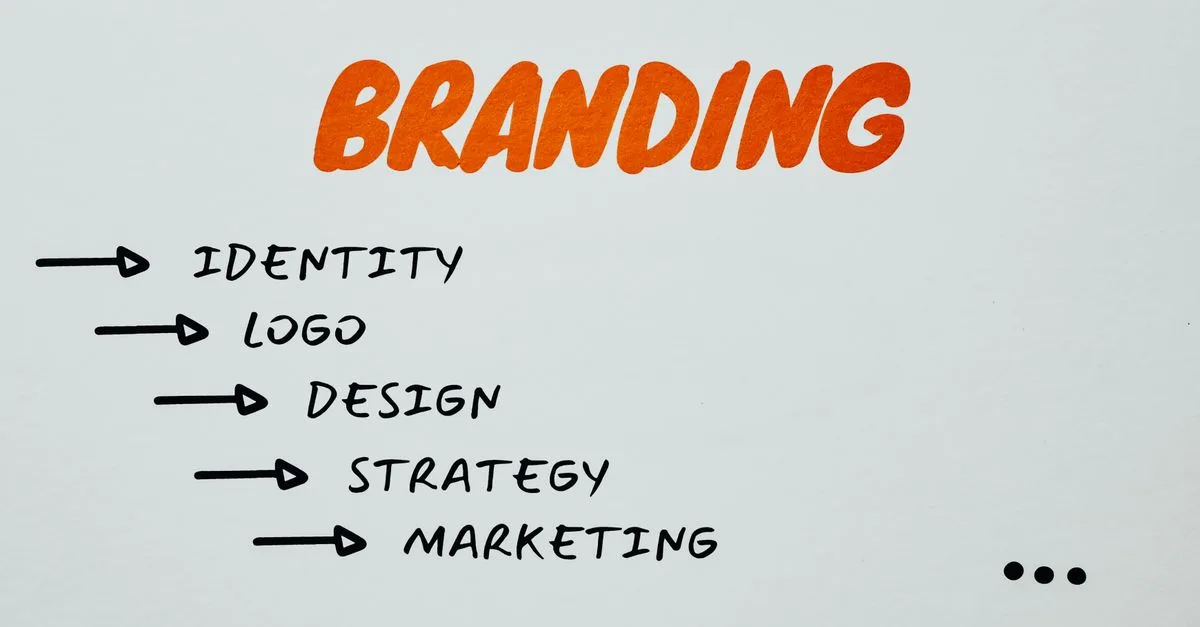
The Core Elements of a Brand
A brand is really a handful of pieces that have to pull in the same direction:
- Purpose and values: why you exist beyond making money, and what you stand for.
- Positioning: the spot you own in your customer’s head compared to rivals.
- Visual identity: your logo, colours, fonts, and imagery.
- Voice and personality: how you sound, whether that’s expert, cheeky, warm, or bold.
- Messaging: your tagline, your promise, the lines you repeat.
- Experience: how people feel at every touchpoint, from your homepage to your help desk.
Types of Branding
Branding shows up in a few different flavours, depending on what you’re building:
- Product branding gives a single product its own personality.
- Corporate branding shapes the identity of a whole company.
- Service branding builds trust around something you can’t hold, where the experience is the product.
- Personal branding grows the reputation of a person, like a founder or creator.
- Co-branding teams two brands up on one product or campaign.
- Geographic branding ties an identity to a place, the way cities market themselves to tourists.
How to Build a Brand: 7 Steps
Here’s a process you can actually follow. Each step comes with a quick exercise, so you finish this section with something on paper.
1. Nail down your purpose and story
Start with why your business exists. A real reason, not a mission-statement cliché. That story is what people connect with.
Try it yourself: Write, in two or three sentences, why you started this business. If it doesn’t get you a little fired up, keep digging.
2. Get specific about your audience
You can’t brand for “everyone.” Figure out exactly who you’re for, what they want, and what keeps them up at night.
Try it yourself: Describe your ideal customer in one paragraph. Their age, their goals, and the one problem you fix for them.
3. Write your mission and positioning
Your mission says what you do and for whom. Your positioning says why you’re the better pick. Together they anchor everything you say.
Try it yourself: Fill in the blanks. “We help [audience] achieve [outcome] by [what makes you different].”
4. Pin down your values and your edge
List the beliefs that guide how you work, and the one clear benefit that makes you worth choosing. That edge is what people remember.
Try it yourself: Jot down three core values and one sentence on what you offer that rivals don’t.
5. Build your visual identity
Design a logo, settle on two or three brand colours, and choose fonts that fit your personality. Stay consistent and people start recognising you fast.
Try it yourself: Pick your main brand colour and one word for the feeling it should give off.
6. Find your voice
Decide how your brand talks. The words you lean on, the ones you avoid. A steady voice makes your writing instantly yours.
Try it yourself: Choose three words for your voice (say, friendly, confident, no-jargon) and write one sentence that sounds like you.
7. Roll it out, then keep it tidy
Put your brand everywhere. Website, social, packaging, email. Then keep an eye on it and tweak as you learn what works.
Try it yourself: Make a one-page brand sheet with your logo, colours, fonts, and voice so nobody has to guess.
Branding Across Channels
Wherever a customer bumps into you, it should feel like the same brand:
- Website: your home turf. Lead with your colours, voice, and message.
- Social media: keep the look and tone steady from one platform to the next.
- Packaging: for physical products, this is a brand moment people can literally hold.
- Customer service: every reply is branding. Helpful, on-voice support earns trust quickly.
Real-World Branding Examples to Learn From
Want to really get branding? Watch the companies that nail it. In each case, notice how it’s the brand, not just the product, doing the heavy lifting:
- Apple sells a feeling of clean, effortless design. It rarely argues about specs, because it’s competing on experience, and people happily pay more for it.
- Nike doesn’t really sell shoes. It sells “you can do this,” wrapped up in three words: Just Do It. The shoe becomes a symbol.
- Coca-Cola has spent a century linking itself to happiness and togetherness, with the same red, the same script, the same warmth everywhere.
- Airbnb turned “book a room” into “belong anywhere,” and became a lifestyle brand instead of a booking site.
The takeaway for you? Decide which feeling you want to own, then hammer it home everywhere until people can’t separate it from your name.
Branding Terms to Know
As you go further, these are the words worth knowing. Each one is a lever you can pull:
- Brand awareness: how familiar people are with you.
- Brand identity: the visible bits you create, like your logo and voice.
- Brand image: how customers actually see you, which isn’t always what you intended.
- Brand positioning: the distinct spot you hold in the market.
- Brand equity: the commercial value that grows out of all that perception.
- Brand loyalty: why people keep picking you over the alternatives.
- Rebranding: refreshing or overhauling a brand you already have.
We’re publishing full guides on each of these. Bookmark this page, since we’ll link them here as they go live.
Branding Tips for Beginners
- Treat your brand like a person with a steady personality and a point of view.
- Pick consistency over perfection. Showing up the same way beats showing up flawlessly once.
- Take inspiration, not a photocopy. Study leaders like the top clothing brands for women, then find your own angle.
- Start small. Your brand can grow up as you learn more about the people you serve.
Key Takeaways
- A brand is a perception. Branding is how you shape it on purpose.
- Branding plays the long game; marketing promotes it.
- Strong brands win recognition, trust, loyalty, and the room to charge more.
- Consistency everywhere is what makes it all stick.
Frequently Asked Questions
What is branding in simple words?
It’s the work of shaping how people see your business, through your name, look, voice, values, and experience, so you become easy to recognise and hard to forget.
What’s the difference between a brand and branding?
A brand is the perception people hold. Branding is what you do to shape that perception.
Is branding just a logo?
No. A logo is one piece of your visual identity. Branding also covers your values, voice, messaging, and the whole experience you deliver.
Why does branding matter for small businesses?
It helps you stand out, earn trust fast, and go toe-to-toe with bigger players by building a real connection with customers.
How do I start branding my business?
Begin with your purpose and audience, then sort out your mission, values, visuals, and voice, and use them consistently everywhere.


Brand Positioning: Definition, Strategies, and Real-World Examples
Two coffee shops sit on the same street, sell a similar cup at a similar price, and yet one has...

Brand Identity vs Brand Image vs Brand Reputation: Key Differences
Featured image — Source: Eva Bronzini / Pexels Ask ten marketers to explain the difference between brand identity vs brand...


What Is Branding? A Complete Beginner’s Guide
Ask ten people what branding means and you’ll get ten different answers. Some say it’s your logo. Others point to...


Best Perfume Brands in India (2026): Top Luxury & Affordable Fragrances Ranked
Choosing from the best perfume brands in India has never been more exciting — or more confusing. Walk into any...


Elon Musk: Business Leader Behind Tesla, SpaceX, and xAI
Quick Facts Field Details Full Name Elon Reeve Musk Born June 28, 1971 Birthplace Pretoria, South Africa Nationality South African,...


Best Places to Visit in Vietnam – Complete Travel Guide
Vietnam is one of the most rewarding destinations in Southeast Asia. It’s a country where emerald bays meet towering limestone...

Best iPhones to Buy in 2026: Top 7 Models Compared with Features, Prices, and Expert Advice
Choosing the best iPhone to buy in 2026 is not simply about picking the newest release. With several generations still...

Why Gold and Silver Are Rising: What’s Driving Precious Metals’ Strong Momentum
Gold and silver are gaining strength as investors seek safe-haven assets amid global economic and geopolitical uncertainty. Silver is outperforming...


Best Hospitals in India for Heart Surgery – Top Cardiac Care Centers in 2026
Heart disease is a significant health challenge in India and worldwide. With rising incidence of coronary artery disease, heart attacks,...


Best Airline Loyalty Programs in 2026: Which Frequent Flyer Programs Are Really Worth It?
Spend enough time in airports and you’ll notice something interesting. Some travelers move effortlessly — priority check-in, lounge access, early...