
Education
Lack of Evidence Hampers Progress on Corporate-Led Ecosystem Restoration
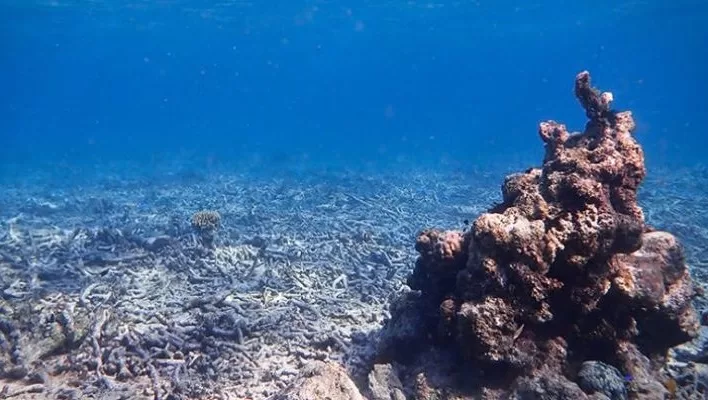
A near-total lack of transparency is making it impossible to assess the quality of corporate-led ecosystem restoration projects, a new study finds.
The world’s largest corporations have the potential to lift ecosystem restoration efforts to an unprecedented scale. But their involvement has to be managed with proper evidence and accountability, to make sure the outcomes are beneficial and fair for everyone.
Rachael Garrett
An international team of scientists has analysed publicly available sustainability reports released by 100 of the world’s largest companies and found that despite many businesses claiming to actively rebuild damaged ecosystems, very little is known about what is actually being achieved.
Efforts to rebuild degraded environments are vital for achieving global biodiversity targets, and corporate-led projects offer huge potential to restore damaged and lost ecosystems around the globe.
But the study reveals that over 90 percent of corporate-led restoration projects fail to report a single ecological outcome. Around 80 percent of projects do not reveal how much money is invested in restoration, and a third fail to even state the area of habitat that they aim to restore.
The United Nations has launched a Decade on Ecosystem Restoration, and in recent years businesses around the world have collectively pledged to plant billions of trees, hundreds of thousands of corals and tens of thousands of mangroves. Around two thirds of the top 100 largest global corporations undertake ecosystem restoration.
The study is published today in the journal Science.
“Ultimately, if big businesses are going to contribute effectively to the UN Decade on Ecosystem Restoration, there needs to be transparency and consistency in reporting,” said Professor Rachael Garrett, Moran Professor of Conservation and Development at the University of Cambridge Conservation Research Institute, and a co-author of the report.
She added: “This is in the interest of the businesses themselves, who stand to gain from demonstrating to their customers, shareholders, employees and the wider public that they are making meaningful impacts with their declared restoration efforts.
“The world’s largest corporations have the potential to lift ecosystem restoration efforts to an unprecedented scale. But their involvement has to be managed with proper evidence and accountability, to make sure the outcomes are beneficial and fair for everyone.”
Many countries require businesses to conduct Environmental Impact Assessments (EIAs) to quantify and reduce their environmental damage, and other private-sector initiatives also encourage companies to measure and disclose their biodiversity impacts. However, the study finds that current guidelines and legal frameworks around ecosystem restoration are inadequate, and are not yet resulting in appropriate reporting by businesses.
The researchers are calling for more transparency around the reporting of corporate-led ecosystem restoration projects, and for reporting to be more consistently centred around scientific principles that determine ecosystem restoration success.
“Restoring degraded ecosystems is an urgent challenge for this decade, and big businesses have the potential to play a vital role,” said Dr Tim Lamont at Lancaster University, lead author of the study.
He added: “With their size, resources and logistics expertise, they could help deliver the large-scale restoration we need in many places. But at the moment there is very little transparency, which makes it hard for anyone to assess if projects are delivering benefits for ecosystems or people.
“When a business says it has planted thousands of trees to restore habitat and soak up carbon – how do we know if this has been delivered, if the trees will survive, and if it has resulted in a functioning ecosystem that benefits biodiversity and people? In many cases, we’ve found that the evidence provided by large corporations to support their claims is insufficient.”
The researchers say new improved reporting guidelines around ecosystem restoration should:
- Recommend that companies clearly differentiate between restoration activities that merely mitigate the negative environmental impacts of a business’s operations from those that aim to provide wider climate, biodiversity and social justice outcomes.
- Recommend a principle-based approach, drawing from conservation science, for planning and reporting, so that restoration projects in a range of different contexts can all maintain high standards across core areas.
- Ensure corporations engage with and empower local stakeholders to co-design restoration projects from the outset.
Source – Cambridge


Best Phones Under 20000 in India 2026: Top 7 Picks
Finding the best phones under 20000 in India has never been this rewarding. In 2026, this price band buys a...


Brand Loyalty: How Successful Brands Keep Customers Coming Back
Featured image — Source: Thirdman / Pexels It costs far more to win a new customer than to keep an...


Brand Awareness: Effective Strategies to Grow Your Business
Featured image — Source: Anurag Jamwal / Pexels Before anyone can buy from you, love you, or recommend you, they...


Brand Equity Explained: Meaning, Importance, and Examples
Featured image — Source: Ann H / Pexels Two bottles of fizzy brown cola sit side by side. One is...


Best Phones Software Updates in 2026: How Many Years of Support Every Brand Gives
When you buy a phone in 2026, the spec that quietly matters most isn’t the camera or the chip —...


Brand Positioning: Definition, Strategies, and Real-World Examples
Featured image — Source: Leeloo The First / Pexels Two coffee shops sit on the same street, sell a similar...

Brand Identity vs Brand Image vs Brand Reputation: Key Differences
Featured image — Source: Eva Bronzini / Pexels Ask ten marketers to explain the difference between brand identity vs brand...


How to Build a Brand From Scratch: A Step-by-Step Guide
Featured image — A brand starts with strategy, not a logo. Source: Walls.io / Pexels Every business you admire started...


What Is Branding? A Complete Beginner’s Guide
Ask ten people what branding means and you’ll get ten different answers. Some say it’s your logo. Others point to...


Best Perfume Brands in India (2026): Top Luxury & Affordable Fragrances Ranked
Choosing from the best perfume brands in India has never been more exciting — or more confusing. Walk into any...