
Education
Inquiry-Based Learning vs. Traditional Learning: What Are We Really Doing in Classrooms?
You ever have one of those flashback moments that hits you like a weird breeze on a regular day?
Last month, I walked past a classroom at a school where a friend teaches. Kids sitting in rows, scribbling notes while a teacher lectured at the front. I paused. It was so familiar it felt like a scene from my own childhood — same setup, same dead silence, same look of kids pretending to care.
And I thought, Wait. We’re still doing this?
Not saying lectures are the villain, but let’s be honest: a lot of us went through 12+ years of schooling just kind of… absorbing stuff. Taking notes. Memorizing chapters. Passing exams. And then, later, forgetting most of it.
It made me wonder: Is that really what learning is supposed to look like?
The Classic System: Traditional Learning
Alright. So traditional learning is the structure most of us grew up with. The teacher talks, students listen. Textbooks are the Bible. Tests are the goalpost. Desks in neat little rows. You get the idea.
It’s organized, sure. And for some topics—like math formulas or historical dates—it works. Kind of. You learn the facts. You pass the test. Everyone moves on.
But here’s the uncomfortable truth: just because you memorized it doesn’t mean you understood it.
I once aced a chemistry test by cramming the periodic table the night before. I couldn’t tell you now what half those elements do, let alone why they matter. I had the grade, but not the knowledge.
That’s the catch with traditional learning. It’s more about delivery than discovery.
So… What Is Inquiry-Based Learning?
Now, flip the script.
Imagine a class starting not with a lecture, but a question. Not the teacher saying “Today we’ll learn about the environment,” but asking, “Why do you think cities are hotter than rural areas?”
That’s inquiry-based learning in a nutshell. Instead of dumping facts, it starts with curiosity. Students explore, question, research, test, fail, rethink. They’re not just receiving information—they’re interacting with it.
It’s messy. It’s open-ended. It takes more time. But man, it’s alive.
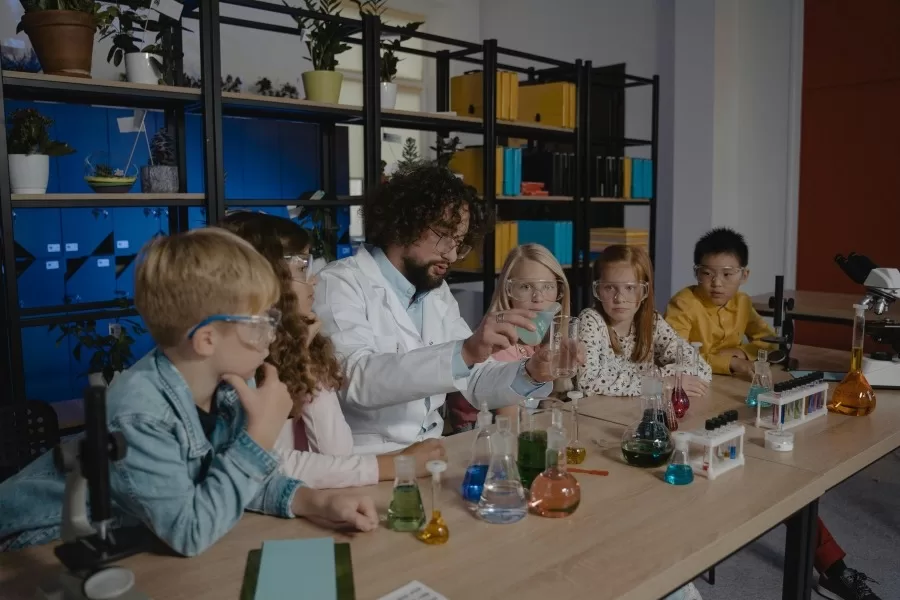
I once saw a middle school class build a mini-water filtration system from scratch because one kid asked how clean their tap water really was. That one question led to a two-week project involving experiments, failed attempts, water testing, and a mini-documentary they filmed on a phone. They learned more than just science—they learned to care.
Here’s the Thing: They’re Not Enemies
People love to frame it as Inquiry-Based Learning vs. Traditional Learning like it’s a boxing match.
Truth is, they’re not enemies. They’re tools. Different tools for different jobs.
You wouldn’t use a sledgehammer to hang a picture frame, right? Same logic applies here. There’s a place for lectures, for repetition, for drilling the basics. Inquiry works best once those basics are in place.
Like, you need to know how to multiply before you can explore why compound interest is such a beast.
That said, traditional learning often overstays its welcome. It dominates the classroom like it’s the only way. And that’s where things get stale.
The Real Difference? Mindset.
What really separates these two approaches isn’t just technique. It’s mindset.
Traditional learning says:
“Here’s what you need to know.”
Inquiry-based learning says:
“What do you want to know, and how can we figure it out together?”
One treats students like vessels to be filled. The other treats them like minds to be sparked.
You can feel it in the room, too. In a traditional setup, most questions come from the teacher. In an inquiry-based class? The kids ask more. They interrupt. They debate. It’s louder. More chaotic. But also more real.
A Quick Story (Because This Still Makes Me Laugh)
My cousin (he’s 10) once asked his teacher why Pluto wasn’t a planet anymore, and she told him to look it up at home because it wasn’t “on the syllabus.”
What.
I mean—he was interested! That moment could’ve opened up a whole discussion on how science evolves, what criteria define a planet, why definitions change. But nope, back to the textbook.
That’s the cost of staying too rigid. We miss the moments that actually matter.
What’s Actually Better?
Ah, the question everyone asks: Which one is better?
Honestly? It depends.
If the goal is high test scores, fast content coverage, and manageable classrooms—traditional methods win. No doubt.
But if the goal is deep understanding, curiosity, creativity, resilience—then inquiry-based learning is the long game.
It’s slower. Less predictable. Sometimes you’ll try something and it’ll totally flop. But you’ll remember it. You’ll grow from it.
Traditional learning gives you answers. Inquiry teaches you how to ask better questions. And in real life? That skill is everything.
Why This Matters Right Now
We’re in a world where information is everywhere. You can Google anything. AI can write your essays. Videos can explain stuff in five minutes flat.
So what’s the value of memorizing facts if they’re a few taps away?
What we need now are people who can filter, question, connect dots, and think critically. That doesn’t come from just reading chapters and circling the right option on a test. It comes from exploration. From making mistakes. From actually engaging with the learning process.
That’s why how we teach matters now more than ever.
Final Thought (Not a Mic Drop, Just Honest)
Here’s where I land: we need both. But we need to stop pretending traditional learning is the gold standard just because it’s been around longer.
We’ve got to leave space for questions. For weird ideas. For experiments that don’t work. That’s where the real stuff happens. That’s where learning sticks.
So the next time a student asks, “Why is Pluto not a planet anymore?”—don’t send them home. Lean into it. Let it be a rabbit hole.
That’s where the learning actually begins.


Best Phones Under 20000 in India 2026: Top 7 Picks
Finding the best phones under 20000 in India has never been this rewarding. In 2026, this price band buys a...


Brand Loyalty: How Successful Brands Keep Customers Coming Back
Featured image — Source: Thirdman / Pexels It costs far more to win a new customer than to keep an...


Brand Awareness: Effective Strategies to Grow Your Business
Featured image — Source: Anurag Jamwal / Pexels Before anyone can buy from you, love you, or recommend you, they...

Brand Equity Explained: Meaning, Importance, and Examples
Featured image — Source: Ann H / Pexels Two bottles of fizzy brown cola sit side by side. One is...

Best Phones Software Updates in 2026: How Many Years of Support Every Brand Gives
When you buy a phone in 2026, the spec that quietly matters most isn’t the camera or the chip —...


Brand Positioning: Definition, Strategies, and Real-World Examples
Featured image — Source: Leeloo The First / Pexels Two coffee shops sit on the same street, sell a similar...

Brand Identity vs Brand Image vs Brand Reputation: Key Differences
Featured image — Source: Eva Bronzini / Pexels Ask ten marketers to explain the difference between brand identity vs brand...

How to Build a Brand From Scratch: A Step-by-Step Guide
Featured image — A brand starts with strategy, not a logo. Source: Walls.io / Pexels Every business you admire started...


What Is Branding? A Complete Beginner’s Guide
Ask ten people what branding means and you’ll get ten different answers. Some say it’s your logo. Others point to...


Best Perfume Brands in India (2026): Top Luxury & Affordable Fragrances Ranked
Choosing from the best perfume brands in India has never been more exciting — or more confusing. Walk into any...