
Finance
Barclays Significantly Increases Sustainable Finance As The Opportunity To Accelerate The Transition Grows
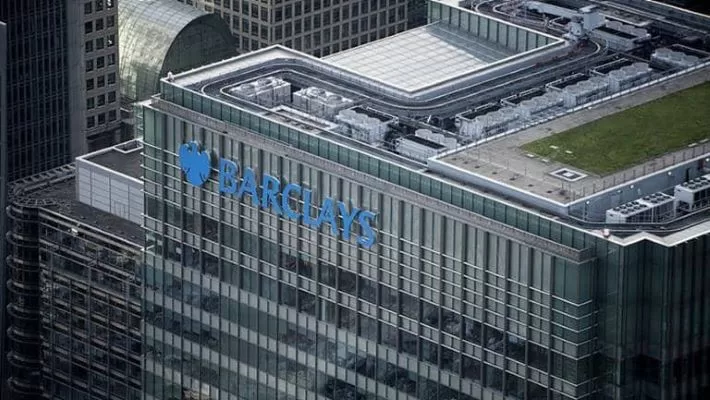
- Investment of Barclays’ equity capital into climate-tech start-ups through its Sustainable Impact Capital portfolio to be ramped up to £500m by end of 2027
- After surpassing existing £150bn target and reviewing growth opportunities, Barclays announces new target to facilitate $1trn of Sustainable and Transition Financing by end of 2030
Following the announcement in February 2022 of Barclays’ strategic priority to capture opportunities from the transition to a low-carbon economy, Barclays has been investing its own capital and facilitating sustainable finance at pace, continuing to deliver against its climate strategy as endorsed by shareholders this year.
Following substantial interest and demand, Barclays announces that it is significantly increasing its own equity capital investment into global climate tech start-ups. The Group’s Sustainable Impact Capital investment mandate will increase from £175m by 2025, to £500m by 2027. The success of the investments to date means an increase in the investment mandate to £500m is required to allow Barclays to continue existing efforts and support new investments.
In the last two and a half years, Barclays has invested £84m1 into innovative start-ups, helping them to scale solutions to environmental challenges and fill their growth stage funding gaps. The Sustainable Impact Capital investments have supported many aspects of climate-tech innovation, from property retrofit solutions to long-duration energy storage and hydrogen technologies.
This next phase of Sustainable Impact Capital investments will see an enhanced focus on decarbonisation technologies that are enabling transition within carbon intensive sectors, particularly where Barclays has meaningful client exposure such as energy and power, real estate and transport. A particular focus will be on carbon capture and hydrogen technologies.
Barclays’ priority is to support its clients as they transition to a low carbon economy, providing advisory services and facilitating the finance needed to transform their businesses and scale essential green technologies. The Group has now surpassed its 2018 target to deliver £150bn of social and environmental financing by 2025 and is on track to meet its target to deliver £100bn of green finance well ahead of the 2030 target date.
As a result, and after a strategic review of the Group’s capabilities, market demand and growth opportunities, Barclays is announcing a new target to facilitate $1trn of Sustainable and Transition Financing between 2023 and the end of 2030. This encompasses the long-term Green, Social, Transition and broader Sustainability-linked Financing requirements of clients including corporates, governments and consumers. Financing of climate and environmental solutions including green mortgages, energy efficient technology and renewable energy, as well as financing for broader social and sustainability work, including sustainability-linked structures and areas such as affordable housing, will all count towards the target.
Barclays will continue to invest in its product platform to facilitate this $1trn of financing, including expanding sustainable debt financing and equity capital markets activity. The Group will invest across business lines, geographies and sectors to further deepen relationships with customers and clients.
The Group recognises the need to assess finance eligibility and report progress transparently against this target. Barclays has set out the Green, Social, and broader Sustainability-linked Financing transactions eligible under the new target in a revised version of Barclays’ Sustainable Finance Framework. This is a clear set of criteria which reflects industry principles and market practice, updated with support from Sustainalytics. Progress against these targets will be published alongside our financial reporting. Barclays is developing a similar Transition Finance Framework, which will determine the eligibility of Transition transactions under this target, recognising that high-emitting sectors need significant financing to pivot their technology and infrastructure.
C.S. Venkatakrishnan, Barclays’ Group Chief Executive, said: C.S. Venkatakrishnan, Barclays’ Group Chief Executive, said: “Today’s announcements reinforce our group-wide strategic priority to capture the opportunities from the transition to a low-carbon economy. From facilitating financing for high-emitting sectors to adapt, to our own equity investments in climate-tech start-ups, to our support for customers and small businesses, Barclays’ diverse ecosystem has the capability and expertise to accelerate the transition across all aspects of the economies that we serve.”
Daniel Hanna, Barclays Global Head of Sustainable Finance for the Corporate and Investment Bank, said: “The final COP27 text stated that $4-6 trillion a year needs to be invested in renewables and decarbonisation solutions until 2030 – including investments in technology and infrastructure – to allow us to reach net-zero emissions by 2050. Barclays is uniquely positioned to help scale the new climate technologies that will decarbonise industries and create green jobs. Many of the technologies that are required to achieve Net Zero have not yet reached commercial scale. Barclays can play a critical role though leveraging our experience as an advisor, bank, and investor through our Sustainable Impact Capital Programme to help accelerate their development and adoption.“
Consistent with Barclays’ Purpose and approach to risk management, Barclays continues to focus on aligning its financing with the goals and timelines of the Paris Agreement, setting targets to reduce financed emissions for high emitting sectors.
– ENDS –
1 Barclays Q3 2022 Results Presentation, slide 26
Notes
- Barclays also continues to focus on aligning its financing with the goals and timelines of the Paris Agreement, setting targets to reduce financed emissions for high emitting sectors.
- In November 2020 Barclays set 2025 targets to reduce its financed emissions in its two highest-emitting sectors: Energy and Power.
- At December 2021, Barclays had achieved a 22% reduction in absolute financed emissions in Energy against its 2025 target of 15%, and a 8% reduction in Power CO2 intensity against its 2025 target of 30%.
- Earlier this year, Barclays set 2030 targets that integrate a 1.5c temperature rise scenario in four of the highest emitting sectors in its financing portfolio – Energy, Power, Cement and Steel.
- Please note comments from C. S. Venkatakrishnan, Barclays’ Group Chief Executive, during the Barclays Q3 2022 Results Analyst and Investor Call: “In our year-end climate update [2022 Annual Report] we expect to bring forward the phase-out date for financing thermal coal power in the US from 2035 to 2030, in line with our approach in the UK and in the EU.”
- Barclays’ Sustainable Finance Framework was updated with support from Sustainalytics, a Morningstar company, and a leading independent ESG and corporate governance research, ratings and analytics firm.
Source – Barclays


Best Phones Under 20000 in India 2026: Top 7 Picks
Finding the best phones under 20000 in India has never been this rewarding. In 2026, this price band buys a...


Brand Loyalty: How Successful Brands Keep Customers Coming Back
Featured image — Source: Thirdman / Pexels It costs far more to win a new customer than to keep an...

Brand Awareness: Effective Strategies to Grow Your Business
Featured image — Source: Anurag Jamwal / Pexels Before anyone can buy from you, love you, or recommend you, they...


Brand Equity Explained: Meaning, Importance, and Examples
Featured image — Source: Ann H / Pexels Two bottles of fizzy brown cola sit side by side. One is...


Best Phones Software Updates in 2026: How Many Years of Support Every Brand Gives
When you buy a phone in 2026, the spec that quietly matters most isn’t the camera or the chip —...


Brand Positioning: Definition, Strategies, and Real-World Examples
Featured image — Source: Leeloo The First / Pexels Two coffee shops sit on the same street, sell a similar...

Brand Identity vs Brand Image vs Brand Reputation: Key Differences
Featured image — Source: Eva Bronzini / Pexels Ask ten marketers to explain the difference between brand identity vs brand...


How to Build a Brand From Scratch: A Step-by-Step Guide
Featured image — A brand starts with strategy, not a logo. Source: Walls.io / Pexels Every business you admire started...


What Is Branding? A Complete Beginner’s Guide
Ask ten people what branding means and you’ll get ten different answers. Some say it’s your logo. Others point to...


Best Perfume Brands in India (2026): Top Luxury & Affordable Fragrances Ranked
Choosing from the best perfume brands in India has never been more exciting — or more confusing. Walk into any...