
Education
Copper Could Help Create Clearer MRI Images and Improved Diagnosis
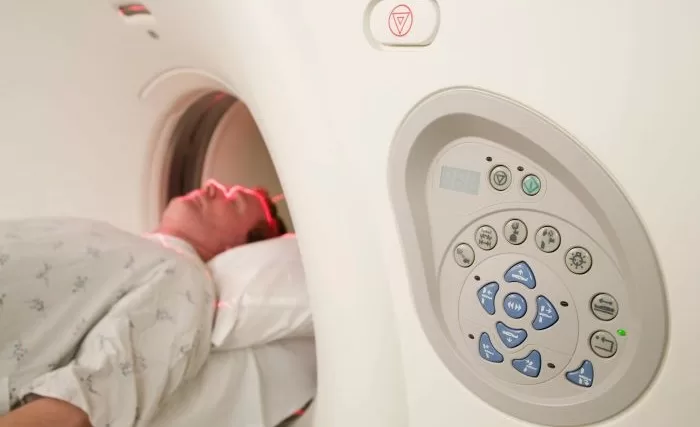
Discovery opens up applications beyond what biology is currently capable of – showcasing how we might engineer new technologies.
Scientists have found a new use for copper in magnetic resonance imaging (MRI) contrast agent design, that could help to create better images which help doctors diagnose patients’ conditions more easily and safely.
Researchers discovered a novel copper protein binding site, which does not occur in nature, that has real potential for use in MRI contrast agents used to improve the visibility of internal body structures in scans.
The discovery overturns conventional medical wisdom that copper is unsuitable for use in MRI contrast agents and could help to develop new imaging agents with potentially fewer risks and side effects than exist with current commonly used contrast agents.
Researchers from the Universities of Birmingham and St Andrews, as well as Diamond Light Source, published their findings in PNAS after creating a highly elusive abiological copper site bound to oxygen donor atoms within a protein scaffold.
Despite copper largely being disregarded for use in MRI contrast agents, our binding site was shown to display extremely promising contrast agent capabilities, with relaxivities equal and superior to the Gd(III) agents used routinely in clinical MRI. Our discovery showcases a powerful approach for accessing new tools or agents for imaging applications.
Dr Anna Peacock, Reader in Bioinorganic Chemistry – University of Birmingham
The experts found that the new structure displayed highly effective levels of relaxivity -the ability of a contrast agent to influence the relaxation times of protons, which helps create clearer and more informative images during an MRI scan.
Co-author Dr Anna Peacock, Reader in Bioinorganic Chemistry at the University of Birmingham, commented: “We prepared a new-to-biology copper–binding site which shows real potential for use in contrast agents and challenges existing dogma that copper is unsuitable for use in MRI.”
“Despite copper largely being disregarded for use in MRI contrast agents, our binding site was shown to display extremely promising contrast agent capabilities, with relaxivities equal and superior to the Gd(III) agents used routinely in clinical MRI. Our discovery showcases a powerful approach for accessing new tools or agents for imaging applications.”
The researchers note that imaging agents based on copper could also be used in Positron emission tomography (PET) scans, which produce detailed 3-dimensional images of the inside of the body.
Their study shows use of an artificial coiled coil to create the copper site within a protein scaffold has achieved function and performance not normally associated with copper.
“Metal sites that are not part of the repertoire of biology are vital in providing protein designers with an expanded toolbox of chemistries they can use to design new functional systems such as the promising imaging capabilities reported here,” added Dr Peacock.
“This opens up applications beyond what biology is currently capable of and showcases some of the advantages of using simple miniature protein scaffolds as a means with which we can engineer new, and maybe currently unknown, metal-binding sites.”
In MRI scanners, sections of the body are exposed to a strong magnetic field causing hydrogen nuclei of water in tissues to be polarised in the direction of the magnetic field. The magnitude of the spin polarisation detected is used to form the MR image but decays with a characteristic time constant known as the T1 relaxation time.
Water protons in different tissues have different T1 values, which is one of the main sources of contrast in MR images. A contrast agent usually shortens, but in some instances increases, the value of T1 of nearby water protons – altering contrast in the image and improving the visibility of internal body structures, with the most used compounds being gadolinium-based contrast agents (GBCAs).
Gadolinium (in the form of Gd3+) is often used as a contrast agent, but there are environmental and patient safety concerns making exploration of new contrast agents an important and active research area. Although more work needs to be done to secure the stability of this new copper protein site, the study authors believe their work is a promising first step towards designing new copper-based contrast agents for clinical MRI scanning.


Best Phones Under 20000 in India 2026: Top 7 Picks
Finding the best phones under 20000 in India has never been this rewarding. In 2026, this price band buys a...


Brand Loyalty: How Successful Brands Keep Customers Coming Back
Featured image — Source: Thirdman / Pexels It costs far more to win a new customer than to keep an...


Brand Awareness: Effective Strategies to Grow Your Business
Featured image — Source: Anurag Jamwal / Pexels Before anyone can buy from you, love you, or recommend you, they...


Brand Equity Explained: Meaning, Importance, and Examples
Featured image — Source: Ann H / Pexels Two bottles of fizzy brown cola sit side by side. One is...


Best Phones Software Updates in 2026: How Many Years of Support Every Brand Gives
When you buy a phone in 2026, the spec that quietly matters most isn’t the camera or the chip —...


Brand Positioning: Definition, Strategies, and Real-World Examples
Featured image — Source: Leeloo The First / Pexels Two coffee shops sit on the same street, sell a similar...


Brand Identity vs Brand Image vs Brand Reputation: Key Differences
Featured image — Source: Eva Bronzini / Pexels Ask ten marketers to explain the difference between brand identity vs brand...


How to Build a Brand From Scratch: A Step-by-Step Guide
Featured image — A brand starts with strategy, not a logo. Source: Walls.io / Pexels Every business you admire started...


What Is Branding? A Complete Beginner’s Guide
Ask ten people what branding means and you’ll get ten different answers. Some say it’s your logo. Others point to...

Best Perfume Brands in India (2026): Top Luxury & Affordable Fragrances Ranked
Choosing from the best perfume brands in India has never been more exciting — or more confusing. Walk into any...