
Education
New Approach To ‘Cosmic Magnet’ Manufacturing Could Reduce Reliance On Rare Earths In Low-Carbon Technologies
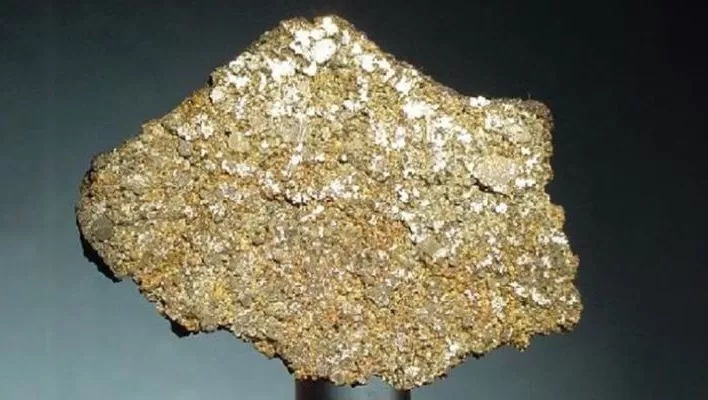
Researchers have discovered a potential new method for making the high-performance magnets used in wind turbines and electric cars without the need for rare earth elements, which are almost exclusively sourced in China.
Between the environmental impacts, and the heavy reliance on China, there’s been an urgent search for alternative materials that do not require rare earths
Lindsay Greer
A team from the University of Cambridge, working with colleagues from Austria, found a new way to make a possible replacement for rare-earth magnets: tetrataenite, a ‘cosmic magnet’ that takes millions of years to develop naturally in meteorites.
Previous attempts to make tetrataenite in the laboratory have relied on impractical, extreme methods. But the addition of a common element – phosphorus – could mean that it’s possible to make tetrataenite artificially and at scale, without any specialised treatment or expensive techniques.
The results are reported in the journal Advanced Science. A patent application on the technology has been filed by Cambridge Enterprise, the University’s commercialisation arm, and the Austrian Academy of Sciences.
High-performance magnets are a vital technology for building a zero-carbon economy, and the best permanent magnets currently available contain rare earth elements. Despite their name, rare earths are plentiful in Earth’s crust. However, China has a near monopoly on global production: in 2017, 81% of rare earths worldwide were sourced from China. Other countries, such as Australia, also mine these elements, but as geopolitical tensions with China increase, there are concerns that rare earth supply could be at risk.
“Rare earth deposits exist elsewhere, but the mining operations are highly disruptive: you have to extract a huge amount of material to get a small volume of rare earths,” said Professor Lindsay Greer from Cambridge’s Department of Materials Science & Metallurgy, who led the research. “Between the environmental impacts, and the heavy reliance on China, there’s been an urgent search for alternative materials that do not require rare earths.”
Tetrataenite, an iron-nickel alloy with a particular ordered atomic structure, is one of the most promising of those alternatives. Tetrataenite forms over millions of years as a meteorite slowly cools, giving the iron and nickel atoms enough time to order themselves into a particular stacking sequence within the crystalline structure, ultimately resulting in a material with magnetic properties approaching those of rare-earth magnets.
In the 1960s, scientists were able to artificially form tetrataenite by bombarding iron-nickel alloys with neutrons, enabling the atoms to form the desired ordered stacking, but this technique is not suitable for mass production.
“Since then, scientists have been fascinated with getting that ordered structure, but it’s always felt like something that was very far away,” said Greer. Despite many attempts over the years, it has not yet been possible to make tetrataenite on anything approaching an industrial scale.
Now, Greer and his colleagues from the Austrian Academy of Sciences and the Montanuniversität in Leoben, have found a possible alternative that doesn’t require millions of years of cooling or neutron irradiation.
The team was studying the mechanical properties of iron-nickel alloys containing small amounts of phosphorus, an element that is also present in meteorites. The pattern of phases inside these materials showed the expected tree-like growth structure called dendrites.
“For most people, it would have ended there: nothing interesting to see in the dendrites, but when I looked closer, I saw an interesting diffraction pattern indicating an ordered atomic structure,” said first author Dr Yurii Ivanov, who completed the work while at Cambridge and is now based at the Italian Institute of Technology in Genoa.
At first glance, the diffraction pattern of tetrataenite looks like that of the structure expected for iron-nickel alloys, namely a disordered crystal not of interest as a high-performance magnet. It took Ivanov’s closer look to identify the tetrataenite, but even so, Greer says it’s strange that no one noticed it before.
The researchers say that phosphorus, which is present in meteorites, allows the iron and nickel atoms to move faster, enabling them to form the necessary ordered stacking without waiting for millions of years. By mixing iron, nickel and phosphorus in the right quantities, they were able to speed up tetrataenite formation by between 11 and 15 orders of magnitude, such that it forms over a few seconds in simple casting.
“What was so astonishing was that no special treatment was needed: we just melted the alloy, poured it into a mould, and we had tetrataenite,” said Greer. “The previous view in the field was that you couldn’t get tetrataenite unless you did something extreme, because otherwise, you’d have to wait millions of years for it to form. This result represents a total change in how we think about this material.”
While the researchers have found a promising method to produce tetrataenite, more work is needed to determine whether it will be suitable for high-performance magnets. The team are hoping to work on this with major magnet manufacturers.
The work may also force a revision of views on whether the formation of tetrataenite in meteorites really does take millions of years.
The research was supported in part by the European Research Council (ERC) under the European Union’s Horizon 2020 research and innovation programme and Seventh Framework Programme, and the Austrian Science Fund.
Source – University Of Cambridge


Best Phones Under 20000 in India 2026: Top 7 Picks
Finding the best phones under 20000 in India has never been this rewarding. In 2026, this price band buys a...


Brand Loyalty: How Successful Brands Keep Customers Coming Back
Featured image — Source: Thirdman / Pexels It costs far more to win a new customer than to keep an...


Brand Awareness: Effective Strategies to Grow Your Business
Featured image — Source: Anurag Jamwal / Pexels Before anyone can buy from you, love you, or recommend you, they...


Brand Equity Explained: Meaning, Importance, and Examples
Featured image — Source: Ann H / Pexels Two bottles of fizzy brown cola sit side by side. One is...


Best Phones Software Updates in 2026: How Many Years of Support Every Brand Gives
When you buy a phone in 2026, the spec that quietly matters most isn’t the camera or the chip —...


Brand Positioning: Definition, Strategies, and Real-World Examples
Featured image — Source: Leeloo The First / Pexels Two coffee shops sit on the same street, sell a similar...

Brand Identity vs Brand Image vs Brand Reputation: Key Differences
Featured image — Source: Eva Bronzini / Pexels Ask ten marketers to explain the difference between brand identity vs brand...

How to Build a Brand From Scratch: A Step-by-Step Guide
Featured image — A brand starts with strategy, not a logo. Source: Walls.io / Pexels Every business you admire started...


What Is Branding? A Complete Beginner’s Guide
Ask ten people what branding means and you’ll get ten different answers. Some say it’s your logo. Others point to...

Best Perfume Brands in India (2026): Top Luxury & Affordable Fragrances Ranked
Choosing from the best perfume brands in India has never been more exciting — or more confusing. Walk into any...