
Technology
Quantum Computing Breakthroughs in 2025: A Strange, Quiet Leap Forward
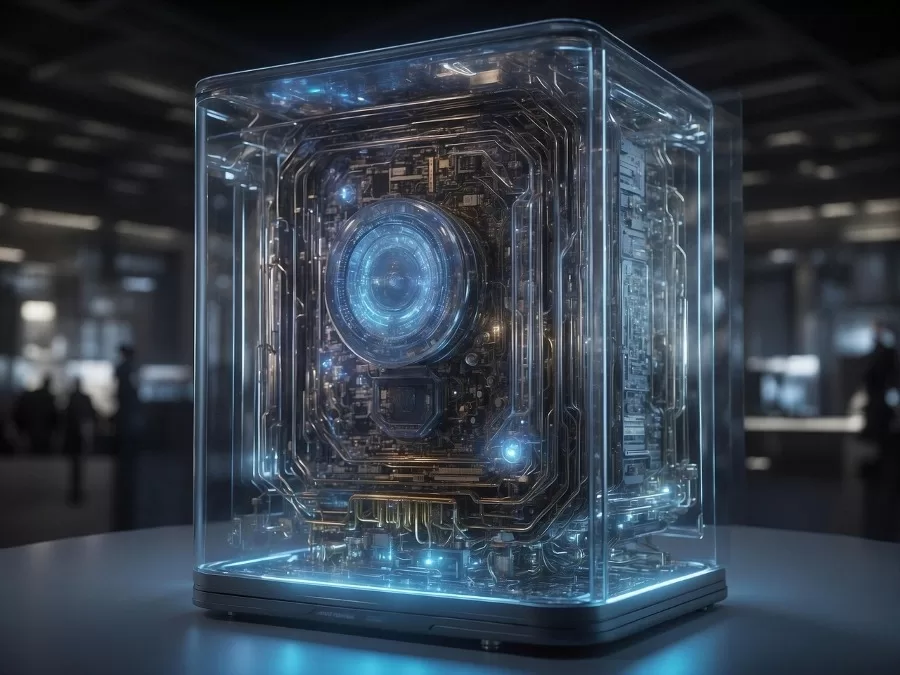
So here’s a weird thing: I never thought I’d be casually reading about quantum entanglement over coffee in 2025. But somehow, this year has brought quantum computing from “that thing sci-fi nerds argue about online” into real, tangible progress — and I don’t think most people have realized just how much has shifted.
If you’re like me — intrigued by tech but not knee-deep in white papers — this year felt like the moment where quantum computing stopped being theoretical noise and started whispering something real. Something big.
Wait, What Even Is Quantum Computing Again?
Look, I’m not a physicist. And if you’re reading this on a regular laptop or phone, you probably aren’t either. But here’s the boiled-down version I tell friends over beer:
Traditional computers speak in bits — little 0s and 1s. Quantum computers, though? They speak in qubits, which can be both 0 and 1 at the same time (it’s weird, I know). That’s because of this thing called superposition. And when those qubits get “entangled” — meaning the state of one is tied to another, no matter how far apart — you get this funky system that can juggle probabilities on a massive scale.
The result? These machines can tackle certain complex problems way faster than today’s computers. But for years, the tech has been flaky, error-prone, and kind of useless outside of labs. Until now.
The Quiet Revolution: Quantum Breakthroughs in 2025
Now, here’s where things get interesting. 2025 didn’t bring us quantum smartphones or teleportation devices (sorry, sci-fi fans), but it did mark a major turning point. And not the flashy kind. It was subtle. Technical. But meaningful.
Let’s walk through some of the more eye-popping stuff — in plain English.
-
IBM Went Full Beast Mode with 2000+ Qubits
In January, IBM dropped the curtain on Condor-X, their new quantum system with over 2,000 qubits. That’s a massive leap from the 433-qubit system they showed off just a couple years back.
Now, before we all freak out and assume they’ve built a God-like machine — they haven’t. A lot of those qubits are still kind of noisy, meaning they’re prone to screwing up. But the real kicker? They managed to keep the system stable long enough to do some serious number crunching. It’s still not “plug and play,” but it’s a big step closer.
To put it another way: if past systems were like juggling eggs while blindfolded, IBM’s 2025 model finally gave us a pair of gloves and let us peek.
-
Error Correction Isn’t Just a Pipe Dream Anymore
For the longest time, everyone’s been saying, “Yeah, quantum sounds cool, but it’s too error-prone to be useful.” And that’s been mostly true — until this year.
Researchers at ETH Zurich and Google Quantum AI figured out a way to actually implement quantum error correction in a scalable way. Think of it like finally adding guardrails to a winding mountain road. It doesn’t mean you’re invincible, but you’re a whole lot less likely to crash.
With this progress, we’re starting to see the first glimpses of real fault-tolerant quantum computing. It’s not all the way there yet, but it no longer feels like a fairytale.
-
AI Started Writing Quantum Algorithms (and Doing It Better)
This part really threw me for a loop. A team from MIT, working with DeepMind, used AI to develop a quantum algorithm that outperformed the best human-designed version… for a molecular simulation.
So not only are we building quantum systems, but we’re now letting AIs figure out how to use them. It’s wild. It’s also kind of poetic — artificial intelligence designing tools for a computational model humans barely understand.
Feels like handing the keys to the spaceship over to the autopilot. Risky? Maybe. Brilliant? Also maybe.
-
Real Wins in Drug Discovery
This is where things stop being abstract and start feeling personal.
Back in May, a biotech firm in Boston used a quantum simulation to accurately model a protein interaction that traditional supercomputers struggled with. It’s not curing diseases overnight — let’s not kid ourselves — but it did speed up drug discovery in a way that shaved months off the process.
Imagine if that means one less month of waiting for a treatment for someone you love. That’s not hype. That’s life-changing.
-
Cryptography Is Officially in “Panic and Prepare” Mode
Here’s the scary side of all this. The same quantum power that can model molecules can also crack encryption. A fully developed quantum computer could make current password protection basically useless.
Governments know this. That’s why 2025 saw a surge in post-quantum cryptography being rolled out in sectors like banking, military, and communications. The U.S. government even issued fresh guidance on quantum-resistant encryption — and companies are scrambling to keep up.
If you’re a developer or anyone building digital products in 2025, this is your “start paying attention” moment.
“So Are We There Yet?” — The Inevitable Question
Short answer? Nah. We’re still crawling.
Quantum computing today is like the early days of flight. The plane’s off the ground, but it’s shaky, slow, and only flying in short bursts. But if you look around — the infrastructure is quietly being built. Startups are popping up. Governments are throwing money. Researchers are publishing results that used to be theoretical fiction.
We’re still a few big jumps away from the “quantum advantage” becoming mainstream, but 2025 gave us something rare: evidence that this stuff is finally starting to work.
What Comes Next?
Here’s what I see on the horizon — not with expert credentials, but with a tech-nerd’s intuition:
- Quantum + AI fusion is going to explode. Not just AI writing code, but AI helping manage quantum noise, optimize qubit usage, and maybe even model quantum hardware design.
- Vertical integration will rule. We won’t see general-purpose quantum computers for a while, but highly specialized ones? For chemistry, materials science, or finance? Those are already surfacing.
- Education’s about to shift. Schools and universities are beginning to offer quantum-focused degrees — not for theoretical physics, but actual software development.
And somewhere in this mix, someone’s going to make something that changes everything. A new encryption method. A new drug. A new material. You won’t even realize quantum tech was behind it — and that’s the point.
My Takeaway — The Tipping Point Is Quiet
What’s striking to me about this year’s quantum breakthroughs isn’t how loud or flashy they are — it’s how quiet they’ve been.
No parades. No shiny Apple-like keynotes. Just researchers, engineers, and a few eccentric billionaires inching us closer to a reality where quantum computing isn’t this mystical artifact… but just another tool in the human toolkit.
That’s what 2025 feels like: the year quantum stopped being fantasy and started being infrastructure.
And maybe the coolest part? We’re still early. The big surprises — the truly wild stuff — that’s still to come.


Best Phones Under 20000 in India 2026: Top 7 Picks
Finding the best phones under 20000 in India has never been this rewarding. In 2026, this price band buys a...


Brand Loyalty: How Successful Brands Keep Customers Coming Back
Featured image — Source: Thirdman / Pexels It costs far more to win a new customer than to keep an...


Brand Awareness: Effective Strategies to Grow Your Business
Featured image — Source: Anurag Jamwal / Pexels Before anyone can buy from you, love you, or recommend you, they...


Brand Equity Explained: Meaning, Importance, and Examples
Featured image — Source: Ann H / Pexels Two bottles of fizzy brown cola sit side by side. One is...

Best Phones Software Updates in 2026: How Many Years of Support Every Brand Gives
When you buy a phone in 2026, the spec that quietly matters most isn’t the camera or the chip —...


Brand Positioning: Definition, Strategies, and Real-World Examples
Featured image — Source: Leeloo The First / Pexels Two coffee shops sit on the same street, sell a similar...

Brand Identity vs Brand Image vs Brand Reputation: Key Differences
Featured image — Source: Eva Bronzini / Pexels Ask ten marketers to explain the difference between brand identity vs brand...

How to Build a Brand From Scratch: A Step-by-Step Guide
Featured image — A brand starts with strategy, not a logo. Source: Walls.io / Pexels Every business you admire started...


What Is Branding? A Complete Beginner’s Guide
Ask ten people what branding means and you’ll get ten different answers. Some say it’s your logo. Others point to...


Best Perfume Brands in India (2026): Top Luxury & Affordable Fragrances Ranked
Choosing from the best perfume brands in India has never been more exciting — or more confusing. Walk into any...